
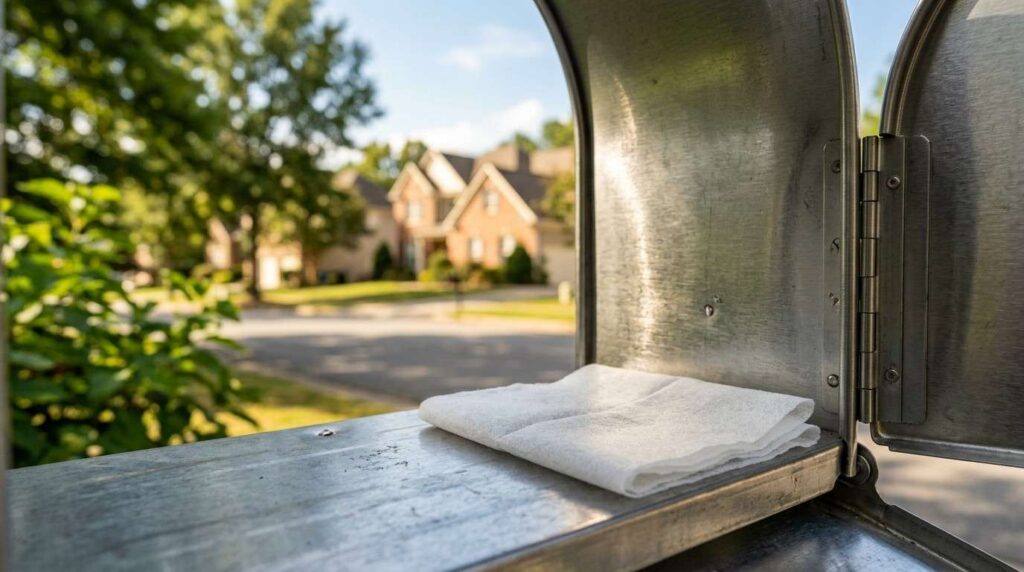
People put dryer sheets in their mailbox primarily to repel wasps, yellow jackets, spiders, and other insects that nest or shelter in small, enclosed spaces. The strong synthetic fragrance in dryer sheets acts as a sensory deterrent, making the mailbox an unappealing environment for pests looking for a protected spot to build nests or lay eggs.
This low-cost trick has spread widely among homeowners in Alexandria, VA and across the country, especially during warmer months when stinging insects become more active. It requires no tools, no chemicals, and no professional service. One or two dryer sheets tucked inside the mailbox can discourage insects from treating it as a nesting site. The practice is simple, inexpensive, and surprisingly effective for many homeowners dealing with recurring pest problems in outdoor fixtures.
The Real Reason Behind the Dryer Sheet Trick
People place dryer sheets in their mailbox because the concentrated fragrance compounds in the sheets, particularly linalool and beta-citronellol, are known to repel certain insects. Wasps and yellow jackets are especially sensitive to strong artificial scents. A mailbox provides exactly the kind of dark, sheltered, low-traffic enclosure these insects prefer for nesting, and dryer sheets disrupt that appeal at the sensory level.
What Pests Are People Actually Trying to Repel?
The most common targets are paper wasps and yellow jackets, both of which frequently build small nests inside mailboxes during spring and summer. Spiders are also a common complaint, particularly in rural and suburban areas where mailboxes sit near vegetation. Some homeowners report using dryer sheets to deter earwigs, ants, and silverfish from taking up residence in outdoor fixtures.
Wasps are the primary concern for most people. A single mailbox can host a small but active nest within days if left undisturbed. For anyone reaching in without looking, that creates a real sting risk. The dryer sheet trick addresses this without requiring pesticide sprays that could contaminate mail or harm pollinators nearby.
Why the Mailbox Is a Common Entry Point for Insects
Mailboxes share several characteristics with ideal insect nesting sites: they are enclosed, weatherproof, rarely disturbed, and positioned at a height that offers protection from ground-level predators. The interior stays relatively dry and dark, which suits paper wasps and spiders particularly well.
Standard residential mailboxes also have a front opening large enough for insects to enter freely. Unlike sealed containers, mailboxes are designed to remain accessible, which means there is no passive barrier keeping pests out. Homeowners who check their mail infrequently, such as those who travel or receive mostly digital correspondence, are especially likely to find unwanted tenants inside.
The same logic that makes a mailbox attractive to insects applies to other small exterior openings around the home. Gaps in siding, outdoor electrical boxes, and ventilation openings present similar conditions. How pests find their way into dryer vents follows the same pattern of seeking dark, enclosed, low-disturbance spaces connected to the interior of a home.
Does Putting a Dryer Sheet in Your Mailbox Actually Work?
The short answer is yes, with limitations. Dryer sheets are not a guaranteed pest control solution, but they do provide a meaningful deterrent for scent-sensitive insects like wasps and spiders. The effect is temporary. Fragrance compounds dissipate over time, especially in heat and direct sunlight, which means dryer sheets need to be replaced every few weeks to remain effective.
For homeowners dealing with persistent wasp activity, dryer sheets work best as a preventive measure rather than a reactive one. Placing a fresh sheet before nesting season begins, typically late spring in the Alexandria, VA area, is more effective than trying to deter insects after they have already started building.
What Homeowners Should Know About Scent-Based Repellents
Scent-based repellents work by overwhelming or confusing the olfactory receptors insects use to identify safe nesting environments. They do not kill insects, and they do not address the underlying conditions that attract pests in the first place. If a mailbox has existing nest material inside, removing it before placing a dryer sheet is essential. Leaving old nest material in place signals to returning insects that the location is already established territory.
It is also worth noting that dryer sheets have no meaningful effect on all insect species. Mosquitoes, flies, and most beetles are largely unaffected. The trick is most reliable for wasps, yellow jackets, and certain spider species.
Other Places Around the Home Where This Trick Gets Used
Homeowners who discover the mailbox trick often apply the same logic to other vulnerable spots around their property. Common locations include outdoor electrical panel boxes, garden tool storage bins, garage corners, and the undersides of patio furniture. Any enclosed, low-traffic space that mimics nesting conditions is a candidate.
One area that often gets overlooked is the dryer vent. Dryer vents are warm, dark, and connected directly to the interior of the home, making them highly attractive to birds, rodents, and insects looking for shelter. Unlike a mailbox, a dryer vent that becomes blocked or colonized by pests creates a genuine safety and air quality risk. Keeping dryer vents clean and sealed is one of the most effective ways to prevent pests from using exterior vent openings as entry points into the home.
Dryer sheets placed near vent openings may offer minor deterrence, but they are not a substitute for proper vent maintenance. A professionally cleaned and inspected dryer vent removes the debris, lint buildup, and organic material that makes the space attractive to pests in the first place.
Conclusion
Dryer sheets repel wasps, spiders, and other insects from mailboxes by overwhelming the scent signals pests use to identify safe nesting sites. The trick is simple, inexpensive, and effective as a seasonal preventive measure.
The same pest-attraction logic applies to dryer vents and other enclosed home openings. Addressing those vulnerabilities requires more than a scent deterrent.
At AirDuctVet Dryer & Vent Cleaning Services, we inspect, clean, and seal dryer vents to remove the conditions that attract pests and compromise your home’s air quality. Contact us today.
Frequently Asked Questions
Do dryer sheets keep wasps out of mailboxes?
Yes. The synthetic fragrance compounds in dryer sheets, particularly linalool, repel wasps and yellow jackets by disrupting the scent signals they use to identify nesting sites.
How often should you replace the dryer sheet in your mailbox?
Replace the dryer sheet every two to three weeks. Heat and sunlight break down fragrance compounds quickly, reducing effectiveness over time.
Can dryer sheets repel all insects?
No. Dryer sheets are most effective against wasps, yellow jackets, and certain spiders. They have little to no effect on mosquitoes, flies, or most beetle species.
Is it safe to put dryer sheets in a mailbox with mail?
Generally yes, though fragrance transfer to paper mail is possible. Using an unscented or lightly scented sheet reduces this risk while still providing some deterrent effect.
What else can I use to keep wasps out of my mailbox?
Peppermint oil on a cotton ball, commercial wasp-repellent sprays applied to the exterior, and regular nest removal are all effective alternatives or complements to dryer sheets.

