
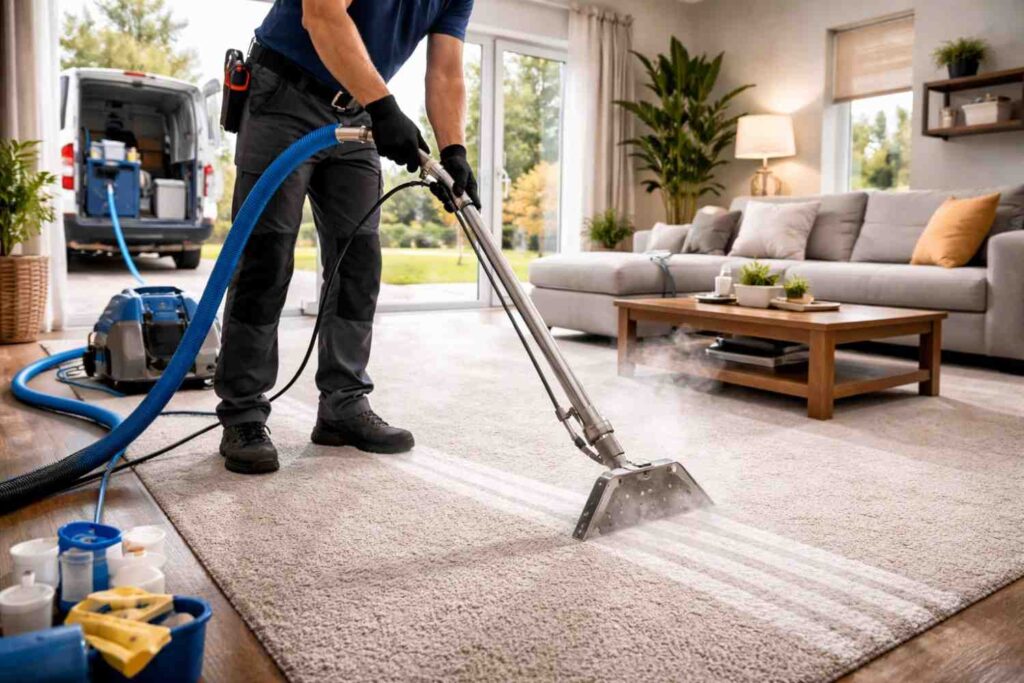
Yes, you should vacuum after Stanley Steemer cleans your carpets, but not right away. Most professionals recommend waiting at least 24 to 48 hours until the carpet is completely dry before running your vacuum over it.
Vacuuming too soon on damp fibers can damage your carpet, clog your vacuum, and undo some of the cleaning work you just paid for. Timing and technique both matter.
This guide covers exactly when to vacuum, how to do it properly, what that post-cleaning residue actually is, and why your air ducts play a bigger role in carpet cleanliness than most homeowners realize.
What Stanley Steemer Actually Does to Your Carpets
Before deciding when to vacuum, it helps to understand what professional carpet cleaning actually involves. Stanley Steemer and similar carpet cleaning companies use a process that goes well beyond what a household vacuum can accomplish. Knowing the method helps you make smarter decisions about aftercare.
Hot Water Extraction Explained
Stanley Steemer primarily uses hot water extraction, sometimes called steam cleaning. This method injects hot water mixed with a cleaning solution deep into carpet fibers under high pressure. A powerful vacuum then extracts the water along with loosened dirt, allergens, dust mites, and debris.
The process reaches the carpet pad and base fibers where dry vacuuming cannot. It is the method recommended by most major carpet manufacturers, including Shaw and Mohawk, for maintaining warranty coverage. The Carpet and Rug Institute (CRI) also recognizes hot water extraction as one of the most effective deep-cleaning methods for residential carpets.
However, hot water extraction leaves moisture behind. Even with industrial extraction equipment, carpets retain some water after the cleaning is complete. This residual moisture is the main reason you need to wait before vacuuming.
What Gets Left Behind After Professional Cleaning
After the technician leaves, your carpet is not just clean. It is damp. Depending on the carpet type, pad thickness, humidity levels, and airflow in your home, that moisture can take anywhere from 6 to 24 hours to fully evaporate.
During this drying period, a few things happen beneath the surface. Soil that was deep in the carpet pad can migrate upward through the fibers as moisture evaporates. This is called wicking, and it is completely normal. Small amounts of cleaning solution may also remain in the fibers, which is why some carpets feel slightly stiff or crunchy once dry.
Neither of these issues means the cleaning failed. They simply mean your carpet needs a proper post-cleaning vacuum once it is fully dry.
Should You Vacuum After Stanley Steemer Cleans Your Carpets?
This is the core question, and the answer is straightforward. But the details around timing and method make a real difference in your results.
The Short Answer
Yes. Vacuum your carpets after they are completely dry following a Stanley Steemer cleaning. This removes loosened soil particles that rose to the surface during drying, any remaining cleaning solution residue, and fiber debris disturbed during the extraction process. Skipping this step can leave your carpets looking dull or feeling gritty within days.
Why Waiting Matters More Than Vacuuming Right Away
Running a vacuum over wet or damp carpet creates problems. Wet fibers clump together and can be pulled or stretched by vacuum rollers. Moisture gets sucked into your vacuum’s filter and bag, creating a breeding ground for mold and bacteria inside the machine. Damp dirt smears rather than lifts, leaving streaks and matted areas.
The cleaning itself did the heavy lifting. Your job afterward is simply to let the carpet dry fully, then vacuum to pick up what the drying process brought to the surface. Patience here protects both your carpet and your vacuum.
How Long to Wait Before Vacuuming After Carpet Cleaning
Drying time varies based on several factors specific to your home. Giving your carpet enough time to dry completely is the single most important step in post-cleaning care.
Recommended Drying Times by Carpet Type
| Carpet Type | Typical Drying Time | Vacuum-Ready Window |
| Low-pile (Berber, commercial) | 6 to 8 hours | 8 to 12 hours |
| Medium-pile (most residential) | 8 to 12 hours | 12 to 24 hours |
| High-pile (plush, frieze) | 12 to 24 hours | 24 to 48 hours |
| Thick pad underneath | Add 4 to 8 hours | Adjust accordingly |
These are general estimates. Homes in Alexandria, VA, especially during humid summer months, may experience longer drying times. Running your HVAC system, ceiling fans, or a dehumidifier speeds up the process significantly.
Signs Your Carpet Is Ready to Vacuum
Do not rely on time alone. Check the carpet yourself before vacuuming.
Press the back of your hand firmly into the carpet in several spots, especially in corners and along walls where airflow is weakest. If it feels cool or damp at all, wait longer. The carpet should feel completely dry to the touch at every point, not just in the center of the room.
Walk on it in bare feet. If you feel any moisture or coolness, give it more time. Once the carpet feels dry, room temperature, and the fibers spring back when you press them, it is ready for vacuuming.
Why Some Residue Appears After Professional Carpet Cleaning
Many homeowners notice spots, streaks, or a general dinginess returning within a few days of professional cleaning. This does not mean the service was poor. Understanding why this happens helps you address it correctly.
Soil Wicking and What Causes It
Wicking is the most common reason carpets look dirty again shortly after cleaning. During hot water extraction, water penetrates deep into the carpet pad. As that moisture evaporates upward through the fibers, it carries dissolved soil and staining agents with it.
Think of it like a paper towel dipped in coffee. The liquid travels upward through the fibers, bringing color with it. The same principle applies to your carpet. Stains that appeared gone while the carpet was wet can reappear as brown or gray spots once dry.
Wicking is more common in heavily soiled carpets, carpets with thick pads, and homes with poor ventilation during the drying period. A thorough vacuuming after full drying removes most wicked soil. For stubborn spots, a second pass with a clean damp cloth followed by another drying period usually resolves the issue.
Cleaning Solution Residue vs. Dirt Resurfacing
Sometimes what feels like residue is actually leftover cleaning solution. If the technician used too much solution or did not extract thoroughly enough, a sticky film can remain in the fibers. This film attracts new dirt faster than clean fibers would, making the carpet look dirty again within weeks.
This is different from wicking. Wicking brings old dirt to the surface. Residue attracts new dirt. You can tell the difference by touch. If the carpet feels sticky or crunchy, it is likely solution residue. If it looks spotted or streaked but feels normal, it is probably wicking.
Vacuuming helps with both issues. For sticky residue, vacuuming multiple times over the first week loosens and removes the film gradually. If the problem persists, it may indicate the cleaning was not performed to industry standards.
The Right Way to Vacuum After Professional Carpet Cleaning
Not all vacuuming is equal, especially on freshly cleaned carpet. Using the right settings and technique maximizes the benefit of the professional cleaning you already paid for.
Vacuum Settings and Technique
Set your vacuum to the correct height for your carpet type. The beater bar or brush roll should lightly contact the fiber tips, not dig into them. On freshly cleaned carpet, aggressive brush settings can pull fibers and create fuzzing.
Vacuum slowly. Move the vacuum forward and back in overlapping passes, spending about 15 to 20 seconds per strip. Fast vacuuming misses particles that slow, deliberate passes pick up. Focus extra attention on high-traffic areas, doorways, and spots near furniture where wicking tends to concentrate.
Use a vacuum with a HEPA filter if possible. Standard vacuums can redistribute fine dust particles into the air, which then settle back onto the carpet or get pulled into your HVAC system. A HEPA-filtered vacuum traps particles down to 0.3 microns, keeping them out of your breathing air.
How Often to Vacuum in the First Two Weeks
Vacuum your carpets at least three to four times during the first two weeks after professional cleaning. The first vacuum, done once the carpet is fully dry, removes the bulk of wicked soil and loosened debris. Follow-up vacuuming over the next 10 to 14 days catches particles that continue to surface as the carpet pad fully dries and settles.
After the two-week period, return to your normal vacuuming schedule. For most Alexandria, VA homes, that means vacuuming high-traffic areas two to three times per week and less-used rooms once per week.
What About Your Air Ducts After Carpet Cleaning?
Here is something most carpet cleaning companies will not mention. Your HVAC system and air ducts play a direct role in how clean your carpets stay after professional cleaning. If you are investing in carpet care, ignoring your ductwork can undermine those results.
How Carpet Cleaning Stirs Up Dust in Your HVAC System
Professional carpet cleaning disturbs dust, allergens, pet dander, and debris that has settled deep in carpet fibers, sometimes for years. While the extraction process removes most of it, some particles become airborne during and after the cleaning.
Your HVAC system circulates air throughout your home continuously. If your air ducts contain accumulated dust, that debris gets blown back onto your freshly cleaned carpets every time the system runs. It is a cycle that frustrates homeowners who wonder why their carpets never seem to stay clean.
In Alexandria, VA, where homes run heating and cooling systems for most of the year, this recirculation effect is especially pronounced. Pollen, humidity, and seasonal allergens add to the duct contamination load.
When to Schedule Air Duct Cleaning After Carpet Work
If you are already investing in professional carpet cleaning, scheduling an air duct cleaning within the same month makes practical sense. Cleaning your ducts after carpet work ensures that any particles stirred up during the carpet cleaning process are removed from the duct system before they resettle.
The National Air Duct Cleaners Association (NADCA) recommends having air ducts inspected and cleaned every three to five years, or more frequently if you have pets, allergies, recent renovations, or visible dust buildup around vents.
Pairing carpet cleaning with duct cleaning gives you a comprehensive approach to indoor air quality rather than addressing one surface while ignoring the system that circulates air across every surface in your home.
Carpet Cleaning vs. Air Duct Cleaning: Understanding the Full Picture
Carpet cleaning and air duct cleaning address different parts of the same problem: indoor contamination. Understanding how they work together helps you make better decisions about where to spend your maintenance budget.
How Dirty Ducts Recontaminate Clean Carpets
Your air ducts are essentially highways for airborne particles. Every time your HVAC system cycles, air moves through the ductwork and out through supply vents, carrying whatever is inside those ducts with it. Dust, pet hair, mold spores, pollen, and construction debris all accumulate in duct systems over time.
When that contaminated air blows across freshly cleaned carpet, particles settle into the fibers. Within weeks, your carpet begins collecting the same debris you just paid to have removed. This is why some homeowners feel like professional carpet cleaning “does not last.” The carpet cleaning worked. The ducts just put the dirt back.
Addressing both systems creates a cleaner baseline for your entire home. Clean ducts mean cleaner air circulating over clean carpets, extending the life of both the carpet and the cleaning results.
Typical Air Duct Cleaning Costs in Alexandria, VA
For homeowners in Alexandria, VA, professional air duct cleaning typically ranges from $300 to $600 for a standard residential system with 8 to 12 vents. Factors that influence cost include the number of vents and returns, system accessibility, level of contamination, and whether the service includes the main trunk line and HVAC unit cleaning.
Be cautious of companies advertising whole-house duct cleaning for $99 or similar low-ball prices. These offers typically cover only a few vents and rely on upselling additional services once the technician is in your home. A legitimate air duct cleaning service should include a clear scope of work, transparent pricing before the job begins, and industry-approved methods such as negative air pressure and mechanical agitation.
The EPA’s guidance on air duct cleaning notes that proper duct cleaning can improve system efficiency and reduce airborne contaminants when performed by qualified professionals using appropriate equipment.
How to Maintain Clean Carpets and Indoor Air Quality Long-Term
Professional cleaning, whether carpet or air duct, is not a one-time fix. It is part of an ongoing maintenance strategy that keeps your home healthier and your surfaces cleaner between service appointments.
A Simple Post-Cleaning Maintenance Schedule
| Timeframe | Action |
| Day 1 to 2 | Keep carpet dry. Run fans, HVAC, or dehumidifier. Avoid foot traffic. |
| Day 2 to 3 | First vacuum once carpet is fully dry. Slow, overlapping passes. |
| Week 1 to 2 | Vacuum every 3 to 4 days. Focus on high-traffic zones. |
| Monthly | Vacuum high-traffic areas 2 to 3 times per week. Spot-treat stains immediately. |
| Every 3 to 5 years | Schedule professional air duct cleaning. |
| Every 12 to 18 months | Schedule professional carpet cleaning. |
Consistency matters more than intensity. Regular vacuuming with a quality machine does more for carpet longevity than occasional deep cleaning alone.
When to Call a Professional Again
Schedule your next professional carpet cleaning when you notice traffic patterns returning, when the carpet feels matted in high-use areas, or at least once every 12 to 18 months regardless of appearance. Homes with pets, children, or allergy sufferers benefit from more frequent service.
For air duct cleaning, watch for visible dust around vent covers, musty odors when the HVAC system runs, increased allergy symptoms indoors, or if you have completed renovations that generated dust and debris. These are clear signals that your duct system needs professional attention.
Staying on a regular maintenance schedule for both carpets and air ducts keeps your indoor environment cleaner, reduces allergen exposure, and protects the investments you have already made in professional cleaning services.
Conclusion
Vacuuming after Stanley Steemer is not just acceptable. It is necessary. Wait until your carpet is completely dry, vacuum slowly and thoroughly, and repeat several times over the following two weeks to capture wicked soil and residue.
What many homeowners overlook is the connection between clean carpets and clean air ducts. Dirty ductwork recirculates contaminants onto freshly cleaned surfaces, shortening the life of every carpet cleaning investment you make.
We at AirDuctVet Dryer & Vent Cleaning Services help Alexandria, VA homeowners complete the picture with professional, transparent air duct cleaning that keeps your entire home cleaner. Contact us today for honest pricing and a thorough inspection.
Frequently Asked Questions
Can I walk on my carpet right after Stanley Steemer leaves?
You can walk on it carefully in clean socks or bare feet, but avoid shoes and heavy foot traffic for at least 6 to 12 hours. Walking on damp carpet pushes dirt from your feet into the wet fibers and can create new stains before the carpet dries.
How long does it take for carpets to dry after Stanley Steemer?
Most carpets dry within 6 to 24 hours depending on carpet thickness, pad density, humidity, and airflow. Running your HVAC system, ceiling fans, or a dehumidifier can cut drying time significantly, especially during humid months in Alexandria, VA.
Why does my carpet smell after professional cleaning?
A mild cleaning solution scent is normal and fades within a day. If you notice a musty or sour smell after 48 hours, the carpet may not be drying fast enough, which can lead to mold growth in the pad. Increase airflow immediately and contact the cleaning company if the odor persists.
Should I move furniture back right away after carpet cleaning?
Wait until the carpet is completely dry before replacing furniture. Placing furniture on damp carpet can cause rust stains from metal legs, dye transfer from wood finishes, and indentations that trap moisture and promote mold growth underneath.
Does vacuuming after carpet cleaning remove the cleaning solution?
Vacuuming removes dried cleaning solution residue that sits on the fiber surface. It will not extract solution trapped deep in the pad, but surface residue is what causes that stiff or crunchy feeling. Regular vacuuming over the first two weeks gradually eliminates it.
How do I know if my carpet cleaner did a good job?
Once fully dry and vacuumed, your carpet should feel soft, look uniform in color, and not feel sticky or crunchy. If stains return within a few days, wicking is likely the cause and a second vacuum usually resolves it. Persistent stickiness suggests too much cleaning solution was left behind.
Is air duct cleaning necessary after carpet cleaning?
It is not mandatory, but it is highly recommended. Carpet cleaning stirs up particles that enter your HVAC system and settle in ductwork. If your ducts are already dirty, they will blow contaminants back onto your clean carpets. Scheduling both services within the same month gives you the best results for indoor air quality.
