
Understanding the Mold Dust Lint Health Threat in Your Home

Your home should be the one place where you feel safe, comfortable, and able to breathe freely. Yet many homeowners unknowingly live with indoor air that quietly works against their health every day. One of the most underestimated indoor dangers is the mold dust lint health threat, a powerful combination of contaminants that builds up out of sight and slowly impacts the air you breathe.
Dust feels harmless because it settles visibly on shelves and floors. Lint seems manageable because it collects neatly in a dryer trap. Mold often feels like a problem only when it becomes obvious on walls or ceilings. The real danger appears when all three combine in hidden areas of your home such as air ducts, dryer vents, wall cavities, basements, and HVAC systems.
In homes throughout Alexandria, heating and cooling systems run most of the year due to humid summers and cold winters. This constant airflow means indoor air contaminants are never truly at rest. When the mold dust lint health threat develops inside your home’s air systems, it affects every room and every person inside the house.
Many families live with symptoms for years without understanding why they never fully feel well at home. Learning how this hidden buildup forms and how it affects your body is the first step toward protecting your family and reclaiming healthier indoor air.
Understanding the Mold Dust Lint Health Threat at Its Core
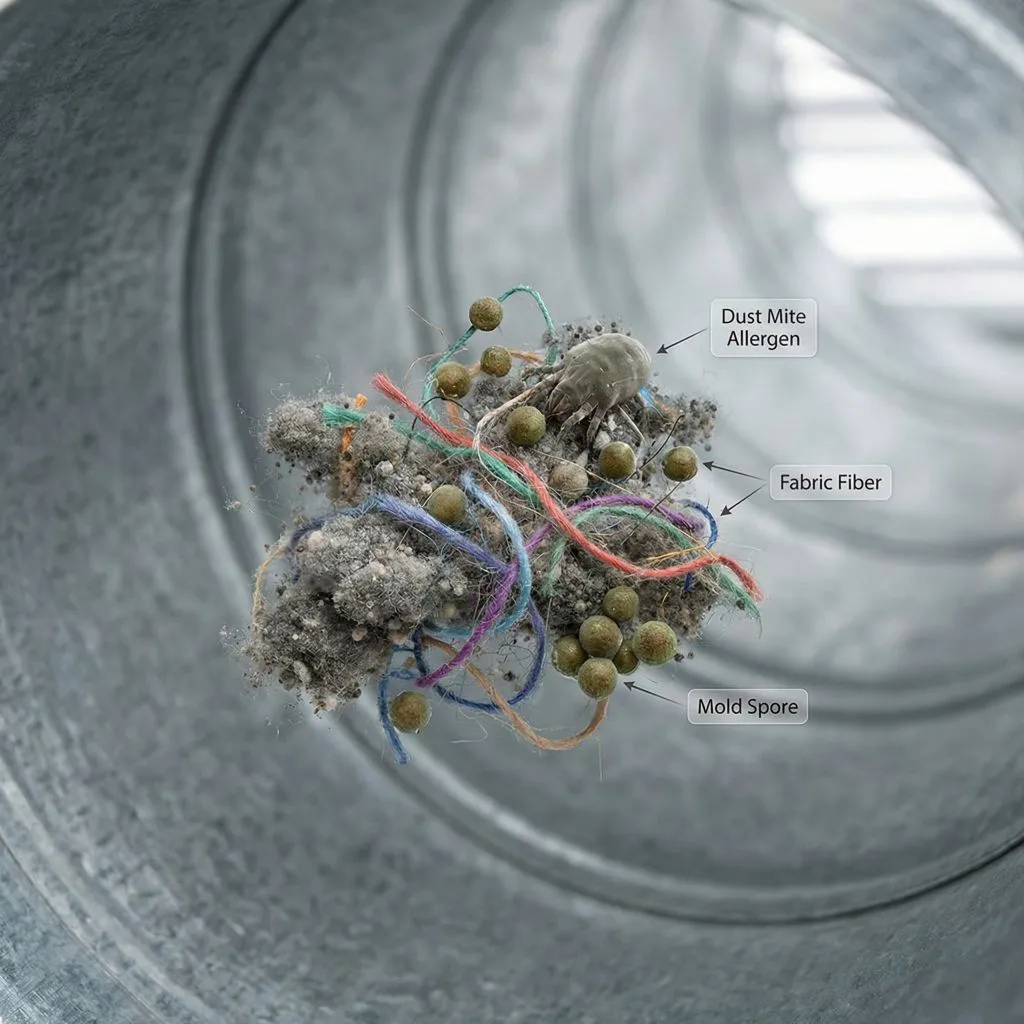
The mold dust lint health threat is not caused by one single issue. It is the result of multiple everyday contaminants combining under the right conditions. Dust is made up of skin cells, pollen, fibers, insect debris, and microscopic particles. Lint consists of fabric fibers released from clothing, bedding, and towels. Mold thrives where moisture and organic material exist.
When these elements gather inside enclosed spaces, they create an environment where mold spores can grow and attach to dust and lint particles. Once this mixture is disturbed by airflow, it becomes airborne and spreads throughout the home.
This is what makes the mold dust lint health threat so difficult to detect. You may never see mold growth directly, yet still breathe in contaminated air daily. Each HVAC cycle reintroduces particles into living spaces, reinforcing exposure again and again.
Why Mold Dust and Lint Thrive Inside Modern Homes
Modern homes are designed to be energy efficient. While this helps lower utility bills, it also reduces ventilation. Less fresh air exchange means indoor pollutants remain trapped longer.
Humidity plays a major role as well. Alexandria’s climate creates ideal conditions for moisture to accumulate inside air systems. Even small amounts of condensation inside ducts allow dust and lint to stick to surfaces. Once moisture is present, mold spores can activate.
Dryer vents are another major contributor. Warm, humid air combined with lint buildup creates one of the most favorable environments for mold growth. Over time, lint absorbs moisture and becomes a breeding ground for contaminants. This adds significantly to the mold dust lint health threat without homeowners realizing it.
Why the Mold Dust Lint Health Threat Often Develops Undetected
One of the most dangerous aspects of the mold dust lint health threat is how quietly it develops. Unlike water damage or visible mold, this buildup occurs slowly. Homeowners adapt to mild symptoms and assume they are normal.
Initial signs may include occasional congestion, headaches, or fatigue. These symptoms are easy to blame on stress, allergies, or seasonal changes. Over time, exposure increases and symptoms become more persistent.
Because ducts and vents are hidden behind walls and ceilings, the source remains unseen. Many homes appear clean on the surface while harboring significant contamination within air systems.
How the Mold Dust Lint Health Threat Spreads Through the Home
Air ducts connect every room. Once contamination exists inside the system, it does not remain isolated. Bedrooms, kitchens, living rooms, and bathrooms all receive the same air.
Dust that reappears quickly after cleaning often originates from vents. Musty odors may signal microbial growth inside ductwork. Dryer vents can release lint and spores into nearby living spaces or wall cavities.
Each heating or cooling cycle distributes the mold dust lint health threat evenly throughout the home, increasing exposure for everyone inside.
5 Hidden Health Risks Caused by the Mold Dust Lint Health Threat
Chronic Respiratory Irritation That Never Fully Resolves
One of the most common effects of the mold dust lint health threat is ongoing respiratory irritation. Fine airborne particles inflame the nasal passages, throat, and lungs with every breath.
Symptoms may include coughing, throat clearing, chest tightness, or shortness of breath. These symptoms often worsen indoors and improve when leaving the home.
Children and seniors are especially vulnerable due to developing or weakened respiratory systems. Over time, breathing discomfort can become a daily issue.
Persistent Allergy Symptoms and Sinus Pressure
Mold spores and dust mites are powerful allergens. When combined with lint fibers, they circulate easily through indoor air.
Sneezing, nasal congestion, sinus pressure, itchy eyes, and headaches may persist year round. Many homeowners treat symptoms with medication without addressing the underlying mold dust lint health threat.
Chronic sinus inflammation increases the risk of recurring sinus infections, facial pain, and post nasal drip.
Increased Asthma Flare Ups and Wheezing
For individuals with asthma, the mold dust lint health threat can significantly worsen symptoms. Mold spores and fine dust irritate airways and increase inflammation.
Asthma flare ups may become more frequent indoors, especially at night when HVAC systems cycle more often. Wheezing, chest tightness, and shortness of breath may increase.
Many asthma sufferers notice better breathing outside the home but struggle indoors due to ongoing exposure.
Weakened Immune System and Frequent Illness
Constant exposure to airborne irritants places stress on the immune system. When the body is always reacting to contaminants, it becomes less effective at fighting infections.
Families may experience frequent colds, lingering coughs, sore throats, and respiratory infections that take longer to resolve. Children may miss more school, and adults may feel chronically run down.
Over time, the mold dust lint health threat quietly reduces overall immune resilience.
Sleep Disruption and Long Term Fatigue
Clean air is essential for restorative sleep. Mold spores, dust, and lint circulating through bedrooms can cause nighttime congestion, coughing, and breathing discomfort.
Poor sleep leads to fatigue, irritability, difficulty concentrating, and weakened immunity. Many people feel exhausted despite getting enough sleep.
The mold dust lint health threat often reveals itself most clearly through poor sleep quality and low daily energy.
Additional Health Effects Often Overlooked
Beyond the five major risks, the mold dust lint health threat can also contribute to skin irritation, eczema flare ups, headaches, brain fog, and mood changes. Airborne contaminants settle on bedding, furniture, and skin, causing irritation even without direct breathing issues.
Children may become more irritable or struggle with focus. Seniors may experience increased fatigue or discomfort. These subtle effects add up over time.
Why Regular Cleaning Cannot Eliminate the Mold Dust Lint Health Threat
Vacuuming and dusting remove visible debris but do not reach inside ducts, vents, or dryer systems. Even high quality air filters capture only a portion of airborne particles.
Filters do not remove buildup already inside the system. Each HVAC cycle continues to redistribute contaminants until the source is removed.
This is why homes can look spotless yet still suffer from the mold dust lint health threat.
How Dryer Vents Contribute to the Mold Dust Lint Health Threat
Dryer vents are often overlooked during routine home maintenance. Lint accumulates deep inside vent lines where moisture is present.
Over time, this creates ideal conditions for mold growth. From there, particles can escape into indoor air or spread into wall cavities.
Homes that do laundry frequently, have long vent runs, or older vent materials are especially at risk.

Why Older Homes Face Higher Risk
Older homes often have aging duct systems that were never designed for modern airflow demands. Small leaks allow dust and debris to enter from wall cavities and attics.
Combined with humidity, this increases the likelihood of mold growth and buildup. Without professional cleaning, contamination accumulates for decades.
Older duct materials may also trap lint and dust more easily, worsening the mold dust lint health threat.
How Professional Cleaning Reduces the Mold Dust Lint Health Threat
Professional air duct and dryer vent cleaning removes accumulated dust, lint, and contaminants from the entire system. This eliminates the reservoir where mold spores thrive.
Improved airflow reduces moisture buildup, making future mold growth less likely. Cleaner systems release fewer particles into indoor air.
Many homeowners notice improved breathing, better sleep, fewer allergy symptoms, and increased comfort after addressing the mold dust lint health threat at its source.
When Homeowners Should Take Action
If you experience persistent allergies, breathing discomfort, frequent illness, excessive dust, musty odors, or poor sleep, indoor air quality should be evaluated.
Homes with pets, children, seniors, recent renovations, heavy dryer use, or long periods without duct cleaning are at higher risk.
Early action prevents long term health effects and improves daily comfort.

Why Alexandria Homeowners Trust Air Duct Vet
Air Duct Vet is a veteran owned and BBB accredited company serving Alexandria and surrounding Northern Virginia communities.
The team understands how hidden air quality problems affect real families. Using professional grade equipment and thorough inspection methods, Air Duct Vet removes dust, lint, and contaminants safely and completely.
Their approach targets the mold dust lint health threat at its source, helping homeowners breathe easier and live more comfortably.
Frequently Asked Questions About the Mold Dust Lint Health Threat
Yes. Lint and dust trap moisture and organic material, creating ideal conditions for mold growth inside ducts and vents.
Yes. Developing lungs and weakened immune systems are more sensitive to airborne contaminants.
Most homes benefit from cleaning every three to five years. Homes affected by the mold dust lint health threat may need more frequent service.
Protect Your Home From the Mold Dust Lint Health Threat
The mold dust lint health threat does not announce itself loudly. It builds quietly, affecting how you breathe, sleep, and feel inside your own home.
Cleaner air supports stronger immunity, easier breathing, better sleep, and improved quality of life for your entire family. By addressing hidden buildup inside your air systems, you take control of your indoor environment.
If you are ready to improve your indoor air quality and protect your home, professional air duct and dryer vent cleaning is a powerful step forward. Schedule your Alexandria service with Air Duct Vet and breathe easier knowing your home air is working for your health, not against it.

