
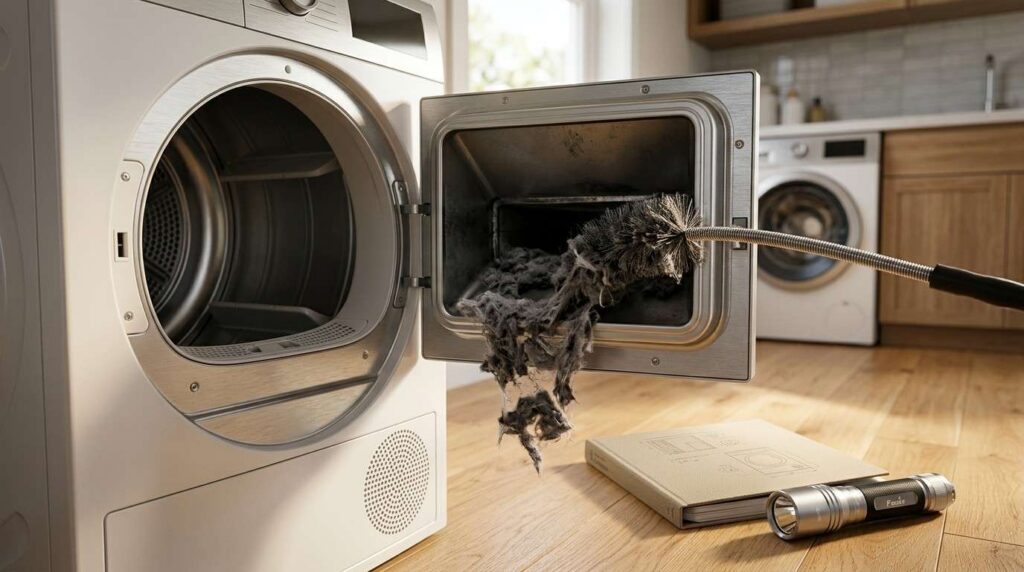
Getting deep lint out of your dryer requires more than pulling the screen — it means cleaning the lint trap housing slot, the interior drum cavity, and the exhaust duct connection point inside the unit. Standard surface cleaning misses the compacted lint that accumulates in these areas over months of use. This guide walks you through every step, the right tools, and the safety precautions that protect your home from one of the leading causes of residential dryer fires in Alexandria, VA and across the country.
What You Need Before You Start
Attempting deep lint removal without the right tools leaves the job incomplete. Lint compacts into narrow channels and around internal components that a hand or standard vacuum attachment cannot reach.
Tools and Supplies Required
Gather these before you begin:
- Dryer vent brush kit — flexible rods with a lint brush head (minimum 12 inches)
- Narrow vacuum attachment — crevice tool or dryer lint vacuum kit
- Screwdriver set — Phillips and flathead for panel access
- Flashlight or headlamp — for visibility inside the drum cavity
- Microfiber cloths — for wiping drum interior surfaces
A dedicated dryer lint brush kit is the single most important tool. Standard vacuum attachments cannot navigate the lint trap housing channel or reach compacted buildup near the blower housing.
Safety Steps to Take First
Before touching any internal component, unplug the dryer from the wall outlet completely. If your dryer runs on gas, turn off the gas supply valve at the connection point behind the unit. Never clean internal components with the dryer powered. Lint is highly flammable, and any heat source or electrical arc during cleaning creates a serious fire risk. Confirm the unit is fully cool before starting if it has run recently.
How to Remove Deep Lint from Your Dryer (Step-by-Step)
Deep lint removal covers three distinct zones inside the dryer: the lint trap housing, the drum interior, and the exhaust duct connection at the back of the unit. Each zone requires a different approach.
Step 1 — Clean the Lint Trap Housing
Remove the lint screen and set it aside. Insert your dryer vent brush into the housing slot and rotate it while pushing it down the full depth of the channel. Compacted lint will loosen and rise to the surface. Follow immediately with your narrow vacuum attachment to extract all loosened debris. Repeat until the vacuum pulls nothing more from the slot. This channel collects more lint per cycle than most homeowners realize, and blockage here directly reduces airflow efficiency.
Step 2 — Access and Clear the Interior Drum Area
Open the dryer door and inspect the drum seal — the rubber gasket running around the door opening. Lint compacts into the folds of this seal and along the drum’s back wall near the heating element cover. Use your crevice vacuum attachment to clear the seal folds, the drum edges, and the small gap between the drum and the front panel. Wipe all interior drum surfaces with a dry microfiber cloth to collect residual lint particles.
Step 3 — Clear the Exhaust Duct from Inside the Unit
Pull the dryer away from the wall and disconnect the flexible exhaust duct from the back of the unit. Insert your dryer vent brush into the exhaust port on the dryer itself — not the wall duct — and rotate it to break up any lint ring that has formed at the connection point. Vacuum the port thoroughly. This interior exhaust port is frequently overlooked during routine cleaning and is a common site for lint ignition.
Once the dryer’s internal zones are clear, the next question most homeowners face is what to do about the full vent line running through the wall — a separate and equally critical part of the system that requires its own cleaning process.
Why Deep Lint Builds Up and How Often to Clean
Lint bypasses the screen on every drying cycle. Fine fibers pass through the mesh and settle in the housing channel, along the drum cavity walls, and inside the exhaust pathway. The rate of accumulation depends on load size, fabric type, and how frequently the dryer runs. Households doing five or more loads per week should deep clean every three to six months. Lower-use households can extend that to once per year, but should not go longer.
Signs Your Dryer Has Dangerous Lint Accumulation
Watch for these warning indicators between cleanings:
- Clothes take longer than one cycle to dry fully
- The dryer exterior or exhaust duct feels hot to the touch during operation
- A burning smell occurs during or after a cycle
- The lint screen fills faster than usual after a single load
- The laundry room feels more humid than normal during drying
Any one of these signals warrants immediate inspection. Recognizing signs your dryer vent is blocked early prevents the buildup from reaching a point where professional intervention becomes necessary on an emergency basis.
Conclusion
Deep lint removal protects your dryer’s efficiency and reduces fire risk by targeting the three zones standard cleaning misses: the trap housing, drum interior, and exhaust port connection.
For homeowners and landlords in Alexandria, VA managing multiple units or older dryer systems, understanding what professional cleaning typically costs helps you decide when DIY maintenance is enough and when a full-service inspection adds real value.
When buildup is severe or the vent line runs a long distance through walls or ceilings, contact AirDuctVet Dryer & Vent Cleaning Services for a professional inspection and thorough cleaning you can trust.
Frequently Asked Questions
How often should I deep clean my dryer lint trap?
Deep clean the lint trap housing every three to six months for high-use households. Lower-use households should clean it at minimum once per year to prevent compacted buildup.
Can deep lint buildup cause a dryer fire?
Yes. Lint is highly flammable. The U.S. Fire Administration identifies dryer lint accumulation as a leading cause of residential dryer fires, making regular deep cleaning a direct safety measure.
What is the best brush for cleaning dryer lint?
A flexible dryer vent brush kit with extendable rods is the most effective tool. It reaches the full depth of the lint trap housing channel and the exhaust port where standard vacuum attachments cannot.
How do I know if my dryer vent is clogged with lint?
Key signs include longer drying times, a hot dryer exterior during operation, a burning smell, and a laundry room that feels unusually humid. Any of these signals a potential blockage requiring immediate inspection.
Should I hire a professional to clean my dryer vent?
DIY cleaning handles the dryer unit itself effectively. However, the full vent line running through walls or ceilings — especially in longer runs or multi-story homes — benefits from professional equipment and inspection to ensure complete clearance.

