
Clearing Air Conditioning Drain Lines: 5 Steps
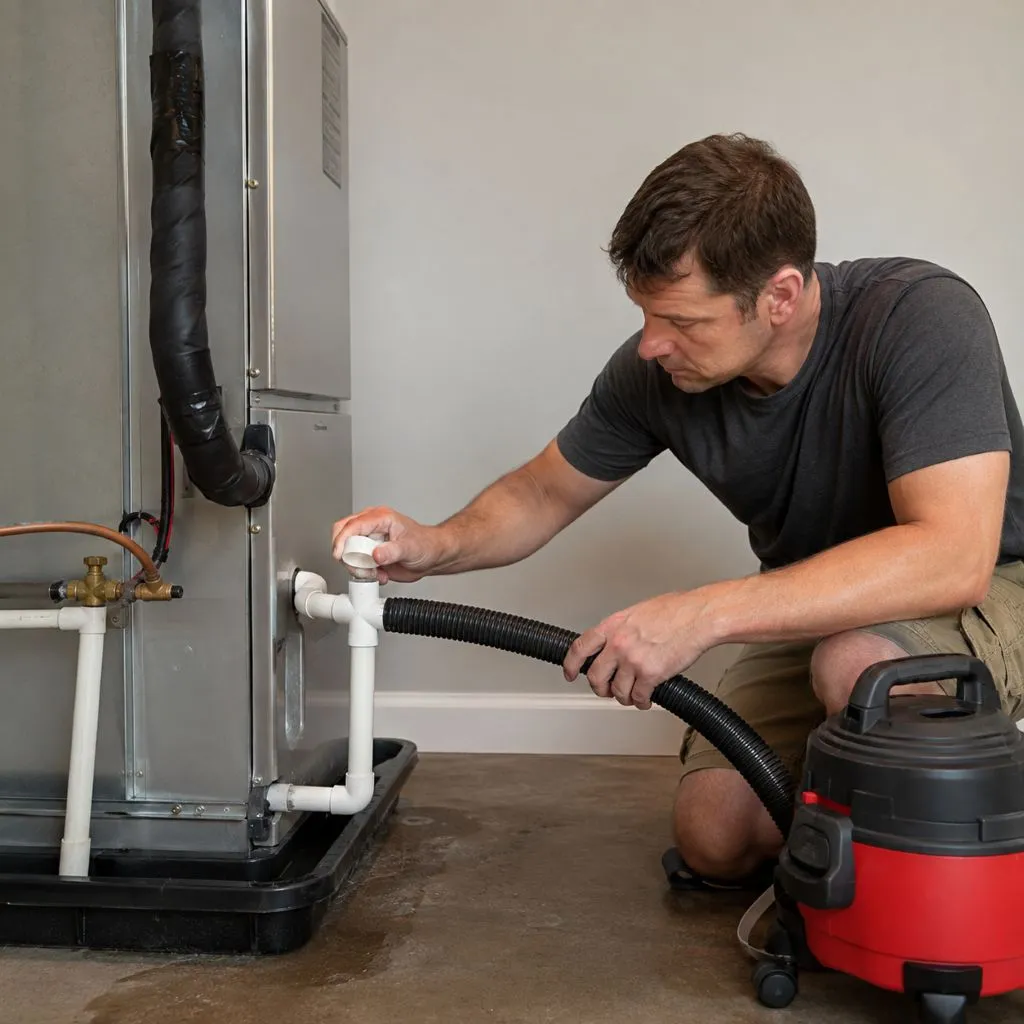
There’s a specific kind of panic that hits when you spot a small puddle of water near your indoor AC unit, or worse, a stain spreading across the ceiling below your attic system. Nine times out of ten, the culprit is a clogged condensate line, and clearing air conditioning drain lines is one of those maintenance tasks that’s simple once you know how, but easy to ignore until water shows up somewhere it shouldn’t.
The good news is this isn’t a job that requires special training or expensive tools. This article walks through five easy steps for clearing air conditioning drain lines yourself, plus how to tell when it’s time to call in a professional instead.
Why AC Drain Lines Clog in the First Place
Your air conditioner pulls humidity out of the air as it cools your home, and that moisture has to go somewhere. It collects in a drain pan and flows out through a condensate line, usually a small PVC pipe, to the outside of your house or into a household drain. Over time, algae, mold, dust, and general debris can build up inside that line, slowly narrowing the passage until water backs up instead of draining properly.
This is exactly why clearing air conditioning drain lines becomes necessary every so often, even in a well maintained system. The warm, moist environment inside the line is basically an ideal breeding ground for algae and mold, and once buildup starts, it tends to accelerate unless it’s addressed.
Step 1: Locate Your Condensate Drain Line
Before you can start clearing air conditioning drain lines, you need to find them. Most systems have a PVC pipe running from the indoor air handler, often in a closet, basement, or attic, to an exit point outside your home or to a nearby floor drain. Look for a T-shaped fitting near the air handler, this is usually the access point you’ll use for cleaning.
What You’re Looking For
The access point typically has a removable cap. If you can’t locate one, check your system’s manual or look for the pipe closest to the indoor unit’s drain pan. Some systems also have a secondary drain pan with its own line, worth checking both if your home has one.
Step 2: Turn Off the System Before You Start
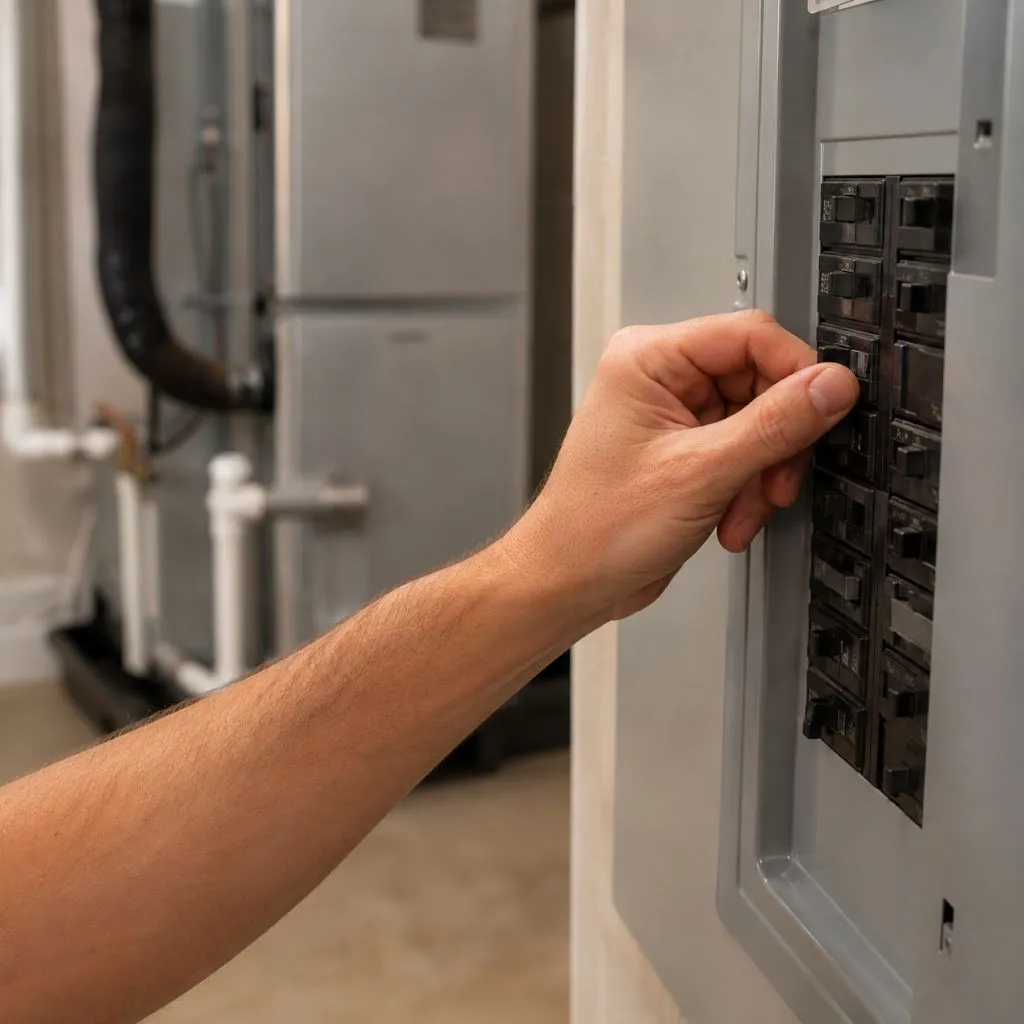
Always switch off your AC system at the thermostat, and ideally at the breaker too, before starting any work on the drain line. This isn’t just a safety precaution, it also stops the system from producing more condensate while you’re working, which makes the whole process of clearing air conditioning drain lines a lot less messy.
A Quick Safety Note
Give the system a few minutes after shutting it off before you begin, just to let any residual water settle in the drain pan rather than working on a system that’s still actively running.
Step 3: Flush the Line With a Wet-Dry Vacuum
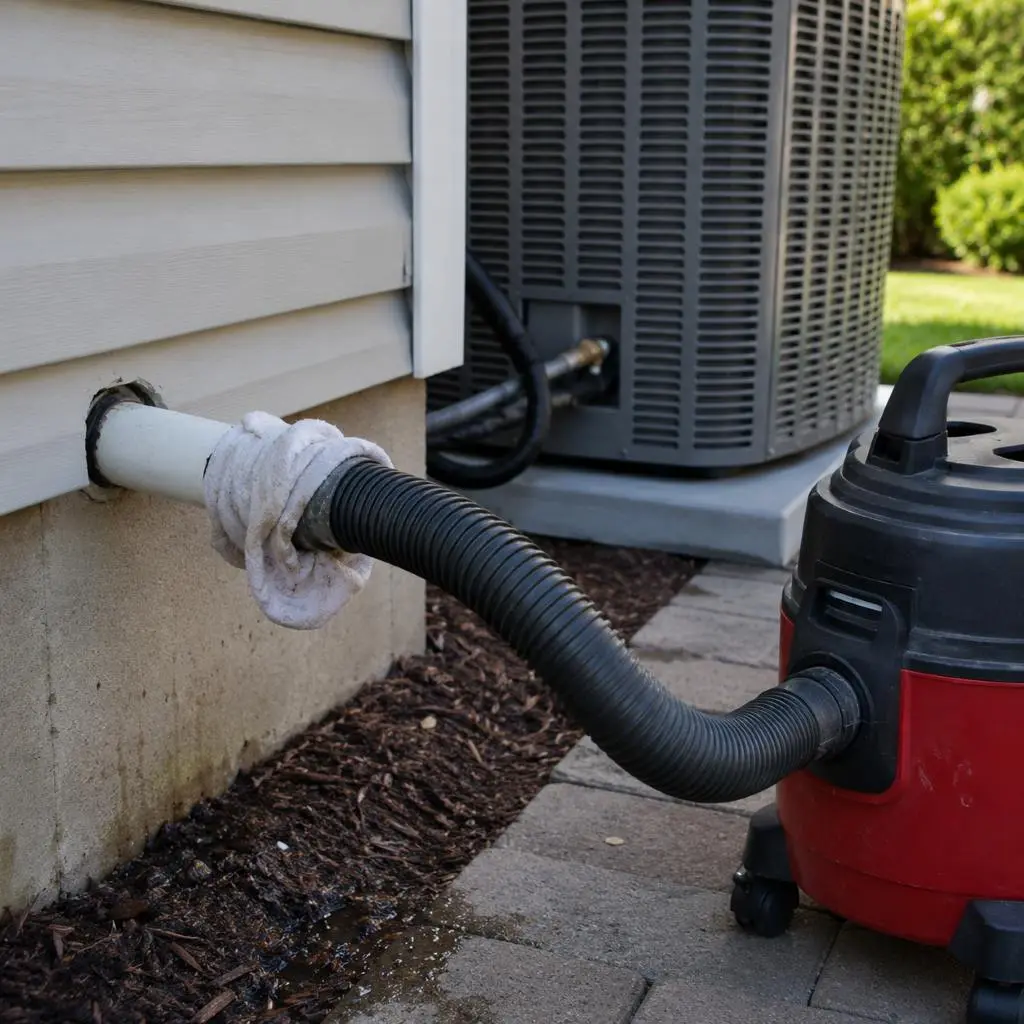
This is often the fastest and most effective method for clearing air conditioning drain lines yourself. Attach a wet-dry shop vacuum to the outside end of the drain line, where it typically exits near your outdoor unit or foundation, and run it for a minute or two. The suction pulls out algae, sludge, and debris that’s built up inside the pipe.
Getting a Good Seal
Use a rag or tape around the vacuum hose where it meets the pipe opening to create a tighter seal, which improves suction significantly. If you don’t have a wet-dry vacuum, a standard household vacuum with a hose attachment can sometimes work for lighter clogs, though it’s less powerful.
Step 4: Use a Vinegar or Bleach Solution to Prevent Regrowth
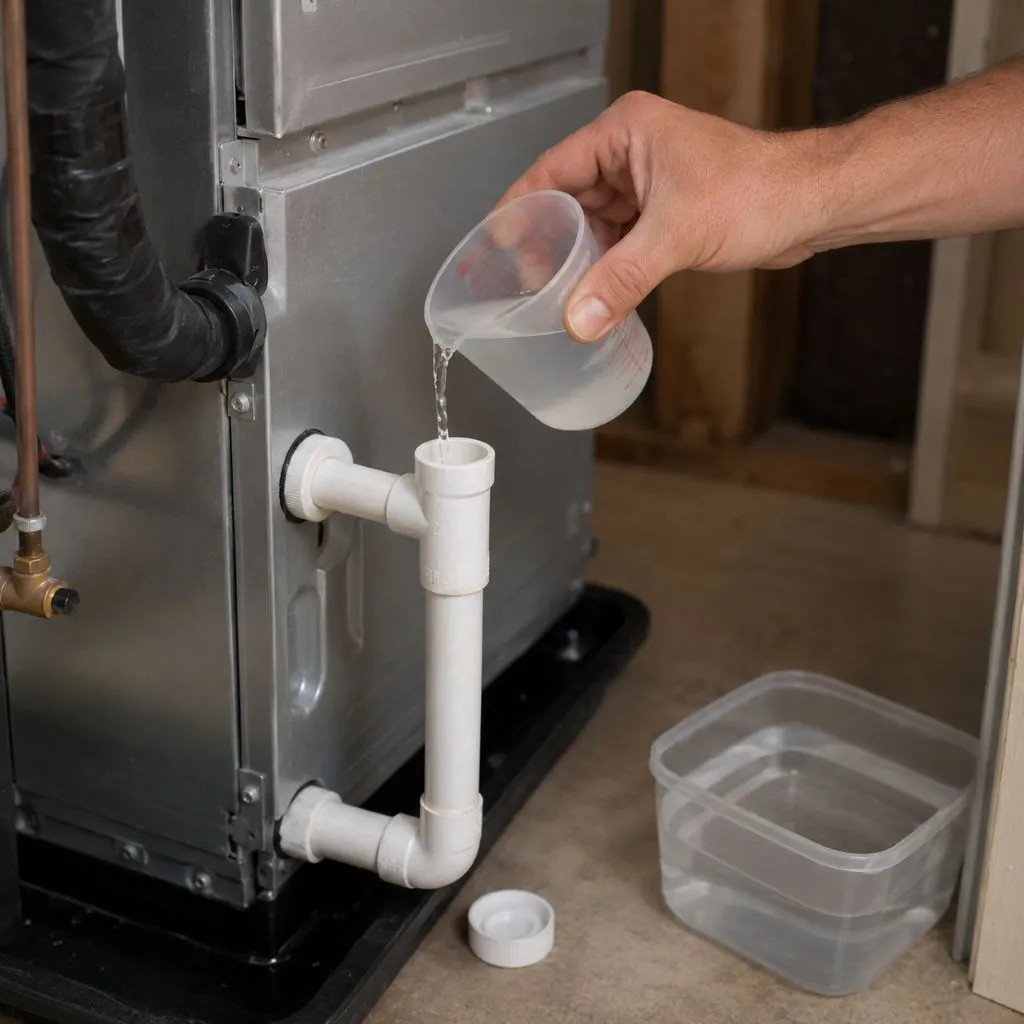
Once the line is physically clear, pouring a cup of distilled white vinegar into the access point near the air handler helps break down any remaining algae or mold and slows regrowth. Let it sit for about 30 minutes before running the system again. Some homeowners use a diluted bleach solution instead, though vinegar is gentler on PVC piping and works well for routine maintenance.
How Often to Repeat This Step
Doing this every one to three months during cooling season keeps clearing air conditioning drain lines from becoming a bigger job later. It’s a small habit that prevents most clogs before they start.
Step 5: Check for Proper Drainage After Clearing
Once you’ve flushed the line and let any solution sit, pour a small amount of water into the access point and confirm it’s draining freely at the outside exit point. If water backs up or drains slowly, there may be a clog further down the line, a kink in the pipe, or a blockage at the exit point itself that needs additional attention.
If the Clog Doesn’t Clear
A stubborn clog that doesn’t respond to vacuuming or flushing might need a plumber’s snake designed for condensate lines, or a call to a professional if it’s further inside the system than you can safely reach.
Signs You Need to Clear Your AC Drain Line
A few warning signs tell you it’s time to start clearing air conditioning drain lines before a small clog turns into water damage. Watch for water pooling near your indoor unit, a musty smell coming from the vents, your AC system shutting off unexpectedly, which many units do automatically when the drain pan overflow switch trips, or visible water stains on ceilings below an attic mounted system.
Catching any of these early usually means a simple DIY fix rather than a bigger repair down the road.
How Often Should You Clear an AC Drain Line
For most households, clearing air conditioning drain lines once or twice a year, ideally right before cooling season starts and again partway through summer, keeps clogs from building up to a problematic level. Homes with heavy tree cover nearby, older systems, or a history of previous clogs may benefit from checking more frequently, closer to every one to two months during peak cooling season.
Why This Matters More in Humid Climates Like North Carolina
North Carolina’s humid climate means air conditioners run longer and harder for much of the year compared to drier regions, which means more condensate moving through your drain line and more opportunity for algae and mold to build up. In the Raleigh and Triangle area specifically, cooling season often stretches from April through October, giving drain lines a long stretch of consistent use where buildup can accumulate steadily if it’s never addressed.
If you’re in this region, clearing air conditioning drain lines on a slightly more frequent schedule than the general recommendation is a reasonable extra precaution, especially for systems with attic mounted air handlers where a clog can lead to real ceiling damage before anyone notices.
Keeping Your System Running Smoothly
None of these five steps take more than a few minutes each, and together they prevent one of the more common and avoidable causes of AC related water damage in homes. To recap: locate your drain line, shut off the system, flush it with a wet-dry vacuum, treat it with vinegar to slow regrowth, and confirm it’s draining properly afterward.
Making clearing air conditioning drain lines a routine part of your seasonal AC maintenance, rather than something you only think about after finding a puddle, saves you from a much messier and more expensive problem down the line.
FAQ Section
Once or twice a year is sufficient for most homes, ideally before cooling season starts and again midway through summer. Homes with heavy tree cover or older systems may benefit from checking every one to two months.
Distilled white vinegar poured into the access point near the air handler is one of the most common and effective DIY methods, along with a wet-dry shop vacuum for physically clearing debris.
A clogged line can cause water to back up into the drain pan and overflow, leading to water damage on ceilings, floors, or walls, and in many systems it will trigger an automatic shutoff to prevent further damage.
Yes, a diluted bleach solution can work, though vinegar is gentler on PVC piping and is generally recommended for routine maintenance rather than bleach, which is better saved for more stubborn buildup.
Common signs include water pooling near the indoor unit, a musty smell from the vents, the system shutting off unexpectedly, or visible water stains on ceilings below an attic mounted unit.
Yes, for most routine clogs. A wet-dry vacuum and a vinegar flush handle the majority of cases. A professional is worth calling if the clog persists after these steps or if you're not comfortable accessing the line yourself.
Humid climates mean air conditioners run longer and produce more condensate, giving algae and mold more opportunity to build up inside the drain line over the course of a longer cooling season.
Conclusion
Clearing air conditioning drain lines is a simple task most homeowners can handle, but if clogs keep coming back or you’re dealing with water damage already, it’s worth having a professional take a closer look at the full system.
AirDuctVet is veteran-owned and BBB-accredited, with a flat-rate, no-upsell approach to every job. No hidden fees, no pressure to add on services you don’t need, just a thorough inspection that gets to the root of the problem.
Schedule an HVAC inspection today and keep your system draining the way it should all season long.

