
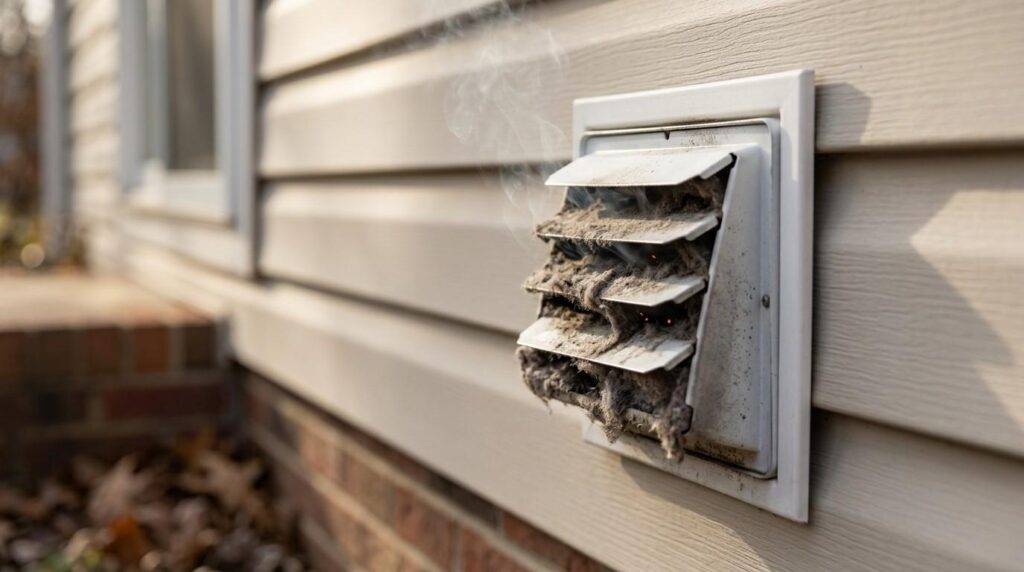
Yes, a dryer vent can catch fire even when the dryer is completely off. Lint accumulates inside the vent duct over time, and that buildup does not disappear when the machine stops running. It stays in place, highly flammable, waiting for a heat source. For Alexandria, VA homeowners, landlords, and property managers, understanding this risk is the first step toward preventing a house fire that starts long after laundry day is over.
Yes — A Dryer Vent Can Catch Fire Even When the Dryer Is Off
A dryer vent can ignite without the dryer running because the hazard is not the machine — it is the material left behind. Lint is extremely combustible. When it accumulates inside a vent duct, it creates a persistent fire risk that exists independently of dryer operation. An external heat source, an electrical fault nearby, or even a bird nest at the vent cap can trigger ignition.
How Lint Buildup Creates a Persistent Fire Hazard
Every drying cycle pushes warm, moist air through the vent duct and deposits microscopic lint fibers along the duct walls. Over months and years, those fibers compact into a dense, dry layer. Lint ignites at relatively low temperatures, and once it catches, it burns fast and hot inside a confined duct.
The U.S. Fire Administration reports that 2,900 home clothes dryer fires are reported each year, with failure to clean the dryer vent identified as the leading cause. That statistic reflects fires that started during operation — but the fuel that fed those fires built up over weeks and months of inactivity between cycles.
What Happens Inside the Vent When the Dryer Is Not Running
When the dryer is off, the vent duct is a sealed or semi-sealed channel. Lint that settled during previous cycles stays exactly where it landed. Moisture from prior cycles can cause lint to clump and adhere more firmly to duct walls. In longer duct runs — common in multi-story Alexandria townhomes and older colonial-style homes — lint can accumulate in bends and horizontal sections where airflow slows.
A blocked or partially blocked vent also traps residual heat longer after each cycle ends. That heat dissipates slowly through the duct walls. If the lint layer is thick enough and a secondary ignition source is present — a nearby electrical panel, a gas line, or even a pest intrusion at the exterior cap — the conditions for fire exist whether the dryer is running or not.
Professional dryer vent cleaning removes that accumulated lint before it reaches a dangerous threshold, restoring safe airflow and eliminating the residual fuel load inside the duct.
Warning Signs Your Dryer Vent Is a Fire Risk Right Now
You do not need a fire to know your dryer vent is dangerous. These warning signs indicate lint buildup has reached a level that requires immediate attention.
- Clothes take longer than one cycle to dry fully
- The dryer exterior or laundry room feels unusually hot after a cycle
- A burning smell lingers after the dryer stops
- The vent cap flap outside does not open fully during operation
- Visible lint accumulation around the dryer door seal or exhaust connection
- The dryer has not been professionally cleaned in more than 12 months
Any one of these signs warrants a professional inspection. Multiple signs together indicate the vent is already partially blocked and the fire risk is active — not theoretical.
How Often Dryer Vents Should Be Cleaned to Stay Safe
Most households need dryer vent cleaning once per year. High-use households — families with children, landlords managing rental units, or properties with long duct runs — may need service every six months. Scheduling an annual dryer vent inspection before peak usage seasons, typically fall and winter in Alexandria, keeps the vent clear when the dryer runs most frequently.
Why Alexandria, VA Homes Face Elevated Dryer Vent Risk
Alexandria’s housing stock includes a high proportion of older townhomes, row houses, and colonial-style single-family homes. Many of these properties have longer, more complex duct runs than newer construction — with multiple 90-degree bends, extended horizontal sections, and vents that exhaust through exterior brick walls rather than directly through a roof or short side wall.
Longer duct runs mean more surface area for lint to accumulate. More bends mean more low-airflow zones where lint settles fastest. Older flex duct materials, still present in many Alexandria homes, have ridged interiors that trap lint far more aggressively than smooth rigid metal duct. These structural factors make regular professional cleaning more critical here than in markets with newer, simpler construction.
Conclusion
A dryer vent fire risk does not require the dryer to be running. Lint buildup inside the duct is the hazard, and it persists around the clock.
For Alexandria homeowners and landlords, the combination of older housing stock and longer duct runs makes routine vent cleaning a direct safety investment, not an optional maintenance task.
Contact AirDuctVet Dryer & Vent Cleaning Services today to schedule a professional dryer vent inspection and eliminate the fire risk before it becomes an emergency.
Frequently Asked Questions
Can a dryer vent start a fire without the dryer being on?
Yes. Lint inside the duct is flammable regardless of dryer operation. An external heat source, electrical fault, or pest intrusion at the vent cap can ignite accumulated lint even when the dryer is completely off.
How do I know if my dryer vent is clogged and dangerous?
Key signs include clothes taking multiple cycles to dry, a burning smell after use, excessive heat around the dryer, and a vent cap that does not open fully during operation. Any of these warrants immediate inspection.
How long does lint take to become a fire hazard in a dryer vent?
Lint buildup reaches a hazardous level within 12 months for average households. High-use homes or properties with long duct runs can reach dangerous accumulation levels in as little as six months.
Does dryer vent length affect fire risk?
Yes. Longer duct runs with multiple bends create low-airflow zones where lint settles faster and more densely. Homes with duct runs exceeding 25 feet face a measurably higher accumulation rate than those with short, direct vents.
Is dryer vent cleaning covered by homeowners insurance?
Cleaning itself is typically not covered, but fire damage caused by a neglected dryer vent may affect a claim outcome. Some insurers require documented maintenance. Check your policy and keep service records after each professional cleaning.

