
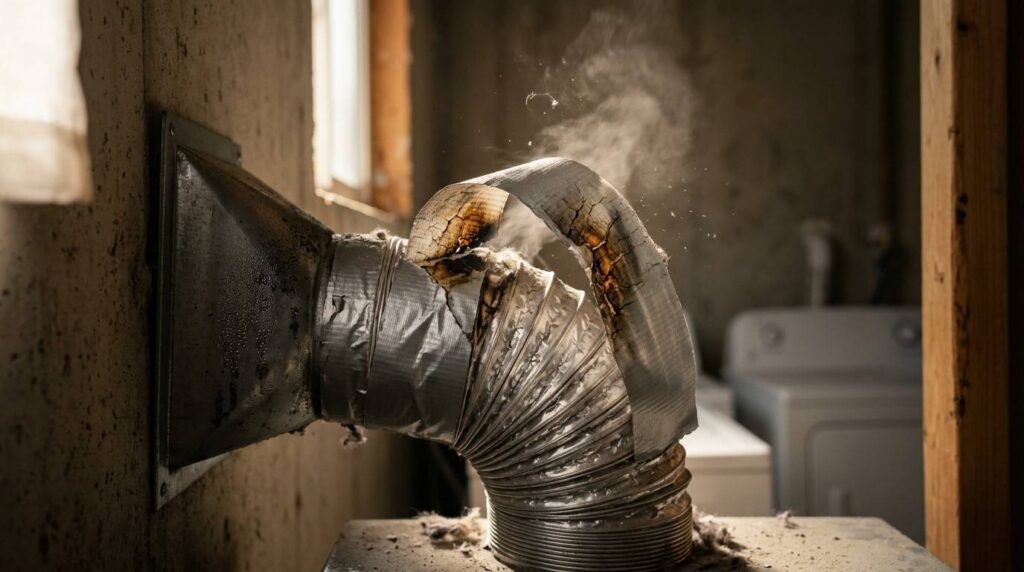
No, you should not seal a dryer vent with duct tape. Standard duct tape uses a rubber-based adhesive that breaks down under the sustained heat a dryer vent produces. Once the adhesive fails, the seal opens, lint escapes into wall cavities, and moisture backs up into the duct system. For Alexandria, VA homeowners, this is not a minor inconvenience. It is a fire and air quality risk that worsens with every load of laundry. The right materials exist, cost very little, and last far longer than any tape from a hardware store drawer.
Why Duct Tape Fails on Dryer Vents
Duct tape is not designed for dryer vent applications. The name creates a reasonable assumption that it belongs in ductwork, but the material properties tell a different story. A standard dryer vent operates at temperatures between 130°F and 165°F during a normal drying cycle. Rubber-based adhesives — the kind used in most consumer duct tape products — begin losing bond strength well below that range. The result is a seal that looks intact from the outside but has already separated at the joint.
Heat Breaks Down the Adhesive
Every drying cycle pushes hot, humid air through the vent at sustained temperatures the adhesive cannot tolerate. The bond weakens progressively. After several weeks of regular use, the tape peels back from the duct surface, leaving gaps at joints and connections. Those gaps allow exhaust air, lint particles, and carbon monoxide from gas dryers to escape into the spaces behind walls and under floors. The failure is not dramatic. It happens gradually, which is exactly why it goes unnoticed until a more serious problem surfaces.
Moisture and Lint Accelerate the Failure
Dryer exhaust carries significant moisture. That moisture condenses on cooler duct surfaces and saturates the tape backing before the adhesive has fully cured. Lint compounds the problem. Fine lint particles coat the tape surface, reducing contact between the adhesive and the duct wall. Together, heat, moisture, and lint create conditions that defeat standard duct tape within weeks. In humid climates and older homes with longer vent runs — common in Alexandria, VA — this failure timeline shortens further.
Professional dryer vent cleaning addresses the lint accumulation and joint integrity issues that tape repairs leave behind, restoring the vent system to a condition where proper sealing materials can actually hold.
What You Should Use Instead
The correct sealing material for dryer vents is aluminum foil tape, also called HVAC foil tape. This is not the same product as standard duct tape. Foil tape uses an acrylic-based adhesive bonded to a thin aluminum backing. It withstands temperatures up to 250°F, handles moisture without delaminating, and maintains a clean seal at duct joints through years of normal use. It is available at any hardware store and costs under ten dollars for a roll that covers multiple connections.
Foil Tape and Approved Mechanical Fasteners
For rigid metal dryer duct sections, foil tape applied over clean, dry duct surfaces provides a reliable seal at joints and transitions. Sheet metal screws add mechanical reinforcement at connection points, particularly where the duct meets the dryer collar or the wall cap fitting. Semi-rigid aluminum duct — the preferred duct type for most residential installations — benefits from both foil tape at joints and a hose clamp at the dryer connection. Flexible plastic or foil accordion duct is not recommended by the U.S. Fire Administration for dryer applications due to lint accumulation risk, regardless of how the joints are sealed.
When a Damaged Dryer Vent Becomes a Safety Risk
A failed duct tape seal is not just an efficiency problem. It is a direct pathway to two serious hazards: lint fires and carbon monoxide exposure. The U.S. Fire Administration reports that dryers and washing machines cause approximately 2,900 home fires each year, with failure to clean the dryer vent listed as the leading contributing factor. A compromised seal accelerates lint buildup inside wall cavities where cleaning equipment cannot reach.
For gas dryer owners, a leaking vent joint creates a secondary risk. Combustion byproducts, including carbon monoxide, can back-draft into living spaces when the exhaust pathway is interrupted. A dryer vent inspection identifies joint failures, blockages, and improper duct materials before those conditions escalate into a fire or health emergency.
Homeowners who notice longer drying times, excess heat around the dryer, or a burning smell during operation should treat those as immediate signals that the vent system needs professional attention, not a temporary tape repair.
Conclusion
Duct tape cannot withstand the heat, moisture, and lint load a dryer vent produces. Foil tape and mechanical fasteners are the correct materials, and they are inexpensive and widely available.
For Alexandria, VA homeowners and landlords, a properly sealed and clean dryer vent is one of the most straightforward ways to reduce fire risk and keep energy costs in check. Addressing joint failures early prevents the more costly repairs that follow when lint reaches wall cavities.
At AirDuctVet Dryer & Vent Cleaning Services, we inspect, clean, and properly seal dryer vent systems so your home stays safe and your dryer runs efficiently. Contact us today to schedule service.
Frequently Asked Questions
Is duct tape safe for any HVAC application?
Standard duct tape is not recommended for any HVAC ductwork. Foil tape or mastic sealant are the approved options for sealing supply and return air ducts in residential systems.
How do I know if my dryer vent seal has failed?
Longer drying times, excess heat near the dryer, visible lint around duct connections, or a musty smell in the laundry area are common indicators that a vent joint has opened or the duct is partially blocked.
Can a poorly sealed dryer vent cause a fire?
Yes. Lint escaping through failed duct joints accumulates in wall cavities and around the dryer itself. Lint is highly flammable, and heat from the dryer exhaust is sufficient to ignite it under the right conditions.
How often should a dryer vent be inspected?
Most manufacturers and fire safety organizations recommend a professional dryer vent inspection and cleaning at least once per year. Households that do multiple loads per day may need service more frequently.
Does a leaking dryer vent affect energy efficiency?
Yes. When exhaust air escapes through failed joints instead of exiting through the exterior wall cap, the dryer works harder and runs longer to complete each cycle, increasing energy consumption and wear on the appliance.

