
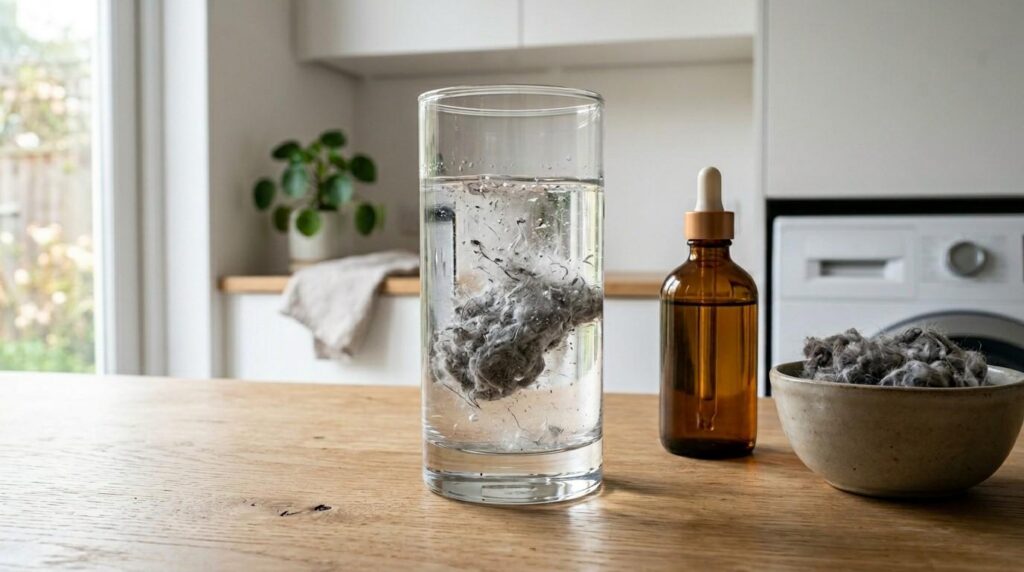
Laundry lint dissolves with enzyme-based detergents, white vinegar, borax, and oxygen bleach. These solutions break down the cellulose fibers, body oils, and detergent residue that bind lint together. While household solutions handle fabric-level lint, deeper buildup in dryer vents and air ducts requires mechanical removal. Homeowners in Alexandria, VA often combine both approaches to protect indoor air quality and appliance performance.
What Actually Dissolves Laundry Lint?
Laundry lint is loosened and broken down by enzyme-based detergents, white vinegar, borax, and oxygen bleach. Enzymes target the protein and cellulose fibers that form lint, while vinegar dissolves the detergent residue and minerals that cause lint to cling to fabric. Borax softens water and lifts trapped fibers. Oxygen bleach breaks down organic binders without damaging textiles.
Enzyme-Based Detergents and Lint Breakdown
Enzyme detergents contain protease, amylase, and cellulase. These compounds digest the organic matter that holds lint together on fabric surfaces. Cellulase specifically targets cotton fibers, which make up the majority of lint shed during a wash cycle. The result is finer particles that rinse away cleanly instead of redepositing on clothes.
Cold and warm cycles both activate these enzymes, though warm water improves performance. Pairing enzyme detergent with a full rinse cycle prevents lint from settling back onto fabric, reducing visible residue on dark garments and lowering the lint load transferred to your dryer.
Vinegar, Borax, and Oxygen Bleach Solutions
White vinegar dissolves alkaline detergent residue and softens hard water minerals that cause lint to stick. Add one cup during the rinse cycle. Borax raises water alkalinity in a controlled way, improving detergent efficiency and helping fibers release from fabric.
Oxygen bleach uses hydrogen peroxide to break down organic binders without weakening fabric or color. Used together, these agents reduce lint redeposit, brighten loads, and minimize the fiber load entering your dryer system.
Household solutions handle lint at the fabric level, but the larger problem is what builds up inside your dryer system. That is where professional dryer vent cleaning becomes essential for homeowners managing long-term lint accumulation.
Where Lint Hides Beyond the Washer
Most lint never makes it into the trap. Fine fibers escape into the dryer drum, settle in transition hoses, and pack into vent walls. Over time, this buildup restricts airflow, increases drying cycles, and creates a fire hazard. No chemical solution dissolves lint inside ductwork. Mechanical brushing and high-pressure air extraction are the only effective removal methods.
For households comparing services, understanding air duct cleaning cost factors helps set realistic expectations on system size, contamination level, and accessibility.
Why Dryer Vents and Ducts Trap Lint
Dryer vents carry hot, humid air carrying microscopic fibers. As that air cools along the duct walls, moisture causes lint to stick. Each cycle adds another layer. Bends, long runs, and rooftop terminations accelerate the buildup. HVAC return ducts also collect airborne lint from laundry rooms, especially in homes with unsealed dryer connections. Annual inspection prevents both efficiency loss and safety risks.
When Dissolving Lint Isn’t Enough
Chemical solutions stop working when lint compacts inside vents, hoses, or HVAC returns. Long drying times, a hot dryer exterior, a burning smell, or visible lint at the outdoor vent hood signal buildup beyond fabric-level treatment. Knowing the warning signs of clogged dryer vents helps homeowners act before efficiency drops or fire risk rises.
At this stage, professional cleaning with rotary brushes, HEPA vacuums, and inspection cameras restores airflow and indoor air quality. Alexandria homeowners typically benefit from inspection every 12 to 18 months, depending on household size and dryer usage.
Conclusion
Enzyme detergents, vinegar, borax, and oxygen bleach effectively dissolve laundry lint at the fabric level, keeping clothes cleaner and reducing buildup in your washer.
For Alexandria homeowners, landlords, and property managers, fabric-level care must pair with periodic vent and duct cleaning to protect appliances, indoor air quality, and home safety long term.
We help you protect your home with transparent, thorough service. Schedule your inspection with AirDuctVet Dryer & Vent Cleaning Services today.
Frequently Asked Questions
Does vinegar dissolve lint in laundry?
Yes. White vinegar dissolves detergent residue and minerals that cause lint to cling, helping fibers rinse away instead of redepositing on fabric.
Can baking soda remove laundry lint?
Baking soda softens water and loosens lint from fabric. Combined with vinegar in separate cycles, it improves rinse performance and reduces visible lint.
What detergent dissolves lint best?
Enzyme-based liquid detergents work best. Cellulase enzymes break down cotton fibers directly, preventing lint from binding to clothing during the wash cycle.
Does hot water dissolve lint better than cold?
Warm water activates enzymes and dissolves residue more efficiently. Cold cycles work but require enzyme detergents formulated for low temperatures.
How often should dryer vents be cleaned?
Most homes need professional dryer vent cleaning every 12 to 18 months. High-use households or long vent runs may require annual service for safety.

