
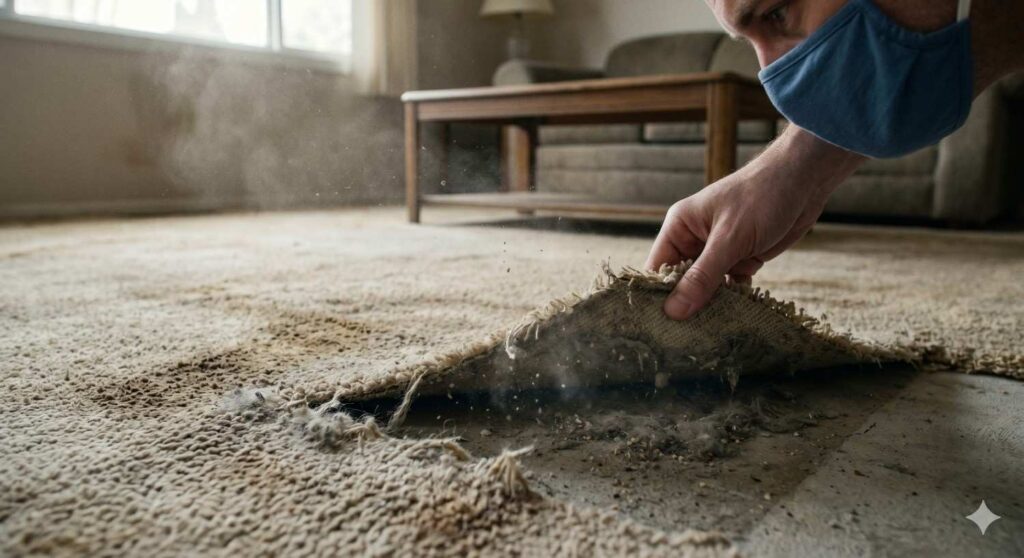
Yes, a 20-year-old carpet can be genuinely unhealthy. After two decades of use, carpet fibers trap allergens, dust mites, mold spores, pet dander, and volatile organic compounds deep beneath the surface where vacuuming cannot reach. For homeowners, landlords, and property managers in Alexandria, VA, aging carpet is not just a cosmetic issue. It is a measurable indoor air quality problem that affects everyone breathing inside the building. This guide explains exactly what makes old carpet hazardous, how to recognize the warning signs, and what steps protect your home’s air.
What Happens to Carpet After 20 Years?
Carpet is not designed to last forever. Most manufacturers and flooring industry professionals recommend replacing residential carpet every 8 to 10 years under normal use. At the 20-year mark, carpet has typically exceeded its functional lifespan by a full decade. What remains is a degraded flooring material that has absorbed years of foot traffic, spills, pet activity, humidity fluctuations, and airborne debris.
The problem is not just surface-level wear. The deeper layers of carpet, including the backing, padding, and subfloor interface, accumulate biological and chemical contaminants that become increasingly difficult to remove as the material ages. Understanding what physically happens to carpet over 20 years helps explain why the health risks are real and not simply a matter of appearance.
How Carpet Fibers Break Down Over Time
Carpet fibers, whether nylon, polyester, olefin, or wool, undergo structural degradation with age and use. Foot traffic compresses and splits fiber strands, creating microscopic surface irregularities that trap particulate matter more effectively than intact fibers. As fibers fray and flatten, the carpet loses its ability to release trapped particles during vacuuming.
The carpet backing, typically made from latex or polypropylene, also deteriorates. Latex backing becomes brittle and begins to crumble, releasing fine particulate dust into the air with every footstep. This process, sometimes called “carpet crumbling” or backing degradation, introduces a new category of airborne particles into the indoor environment that did not exist when the carpet was new.
Adhesives used during installation can also break down over 20 years, particularly in areas with temperature fluctuations or moisture exposure. This degradation contributes to off-gassing and can compromise the structural integrity of the carpet’s bond to the subfloor, creating gaps where moisture and biological growth can take hold.
Why Older Carpet Holds More Contaminants Than New Carpet
New carpet has a relatively uniform fiber structure with limited capacity to trap fine particles. Over time, that changes significantly. Each year of use adds layers of embedded debris, and the cumulative effect at 20 years is substantial.
Studies examining carpet as a reservoir for indoor pollutants consistently show that older carpet contains higher concentrations of dust mite allergens, pet dander, mold spores, bacteria, and chemical residues than newer flooring. The carpet acts as a sink, absorbing contaminants from the air and from foot traffic, and releasing them back into the breathing zone when disturbed.
In a home or rental property that has housed multiple occupants, pets, or experienced any water intrusion over 20 years, the contamination load in the carpet can be significant. For landlords and property managers evaluating a unit between tenants, this is a critical consideration that directly affects tenant health and liability exposure.
Health Risks of Old Carpet: What the Research Shows
The health risks associated with aging carpet are well-documented across environmental health, allergy, and indoor air quality research. They fall into three primary categories: biological allergens, microbial growth, and chemical off-gassing. Each category presents distinct risks, and in a 20-year-old carpet, all three are typically present simultaneously.
Allergens, Dust Mites, and Respiratory Triggers in Aging Carpet
Dust mites are among the most significant biological hazards in old carpet. These microscopic arachnids feed on shed human skin cells and thrive in the warm, humid microenvironment created by carpet fibers. Their fecal particles and body fragments are potent allergens that trigger asthma attacks, allergic rhinitis, and chronic respiratory irritation.
The American Lung Association identifies dust mite allergens as one of the most common indoor asthma triggers, particularly in carpeted environments. A single square yard of carpet can harbor thousands of dust mites, and at 20 years of age, the population density and allergen load in carpet padding can be extremely high.
Pet dander, pollen, and mold spores accumulate in carpet in the same way. Even in homes without current pets, carpet can retain pet allergens from previous occupants for years. For tenants with allergies or asthma moving into a property with 20-year-old carpet, this legacy contamination presents an immediate health concern.
Mold and Moisture Trapped Beneath Old Carpet
Moisture is carpet’s most dangerous long-term enemy. Over 20 years, virtually every carpet experiences some form of moisture exposure, whether from spills, humidity, plumbing leaks, or condensation. When moisture penetrates carpet and reaches the padding or subfloor, it creates conditions ideal for mold growth.
Mold beneath carpet is particularly dangerous because it is invisible. Occupants may experience mold-related symptoms, including chronic coughing, nasal congestion, eye irritation, fatigue, and headaches, without ever identifying the source. By the time mold becomes visible at carpet edges or produces a detectable musty odor, the colony beneath the surface is typically well-established.
The EPA’s guidance on mold in buildings notes that porous materials like carpet and padding that have been wet for more than 48 hours and cannot be thoroughly dried should be discarded. In a 20-year-old carpet that has experienced multiple moisture events, the probability of active or dormant mold contamination in the padding is high.
VOCs and Off-Gassing from Carpet Installed Decades Ago
Carpet manufactured and installed 20 years ago was produced under different chemical standards than today’s flooring products. Older carpets may contain higher concentrations of volatile organic compounds (VOCs) from adhesives, dyes, stain treatments, and backing materials that were common in manufacturing at that time.
While new carpet is known for its initial off-gassing period, older carpet presents a different chemical risk. Decades of accumulated chemical residues from cleaning products, pest control treatments, and household chemicals absorbed into the fibers can off-gas over time. Flame retardants and stain-resistant treatments applied to older carpets may include compounds that have since been restricted or phased out due to health concerns.
For households with young children who spend time on the floor, or for occupants with chemical sensitivities, the cumulative VOC exposure from 20-year-old carpet is a legitimate health consideration that warrants serious attention.
How Old Carpet Affects Indoor Air Quality in Your Home
Indoor air quality is directly influenced by the condition of every surface in a home, and carpet is one of the largest surface areas in most residential properties. A 20-year-old carpet does not just sit passively on the floor. It actively participates in the indoor air quality cycle, both as a reservoir for pollutants and as a source of re-emission.
The Connection Between Carpet Age and Airborne Particle Levels
Every time someone walks across old carpet, sits down, or moves furniture, the disturbance releases trapped particles back into the air. This resuspension effect means that the contaminants stored in carpet fibers and padding become airborne pollutants that occupants inhale directly.
Research published in environmental health literature consistently shows that homes with older carpet have higher concentrations of settled dust, allergen particles, and biological contaminants in the breathing zone compared to homes with hard flooring or newer carpet. The older the carpet, the greater the reservoir of particles available for resuspension.
For households with children, elderly residents, or anyone with respiratory conditions, this ongoing particle release from aging carpet contributes meaningfully to the total indoor pollutant load. In Alexandria, VA, where seasonal humidity fluctuations are significant, the moisture-related amplification of biological contaminants in old carpet is an additional concern.
How Your HVAC System Circulates Carpet Contaminants
The relationship between old carpet and your HVAC system is one that many homeowners overlook entirely. Your heating and cooling system draws air from every room in the house, passes it through the ductwork, and redistributes it throughout the living space. In doing so, it also moves airborne particles released from carpet throughout the entire home.
Dust mite allergens, mold spores, pet dander, and fine carpet fiber particles that become airborne from old carpet are captured by your HVAC return air vents and deposited inside your duct system. Over time, these contaminants accumulate on duct surfaces, inside air handlers, and on evaporator coils, creating a secondary reservoir of pollutants that the system then recirculates continuously.
This is why addressing old carpet and air duct cleanliness together is more effective than treating either in isolation. If you replace old carpet but leave contaminated air ducts untreated, your HVAC system will continue redistributing the accumulated debris from years of carpet-related contamination. Conversely, cleaning your air ducts while leaving 20-year-old carpet in place means the ducts will be recontaminated relatively quickly.
Signs Your 20-Year-Old Carpet Is Making You Sick
Recognizing the connection between old carpet and health symptoms is not always straightforward. Many of the symptoms associated with carpet-related indoor air quality problems are similar to seasonal allergies or common respiratory illnesses, which can delay identification of the true source.
Physical Symptoms Linked to Old Carpet Exposure
The following symptoms, particularly when they improve when you leave the home and worsen when you return, may indicate that old carpet is contributing to poor indoor air quality:
- Persistent sneezing, nasal congestion, or runny nose without a clear seasonal trigger
- Itchy, watery, or red eyes that improve outdoors
- Chronic coughing or throat irritation, especially in the morning
- Worsening asthma symptoms or increased frequency of asthma attacks
- Skin irritation, rashes, or eczema flare-ups without an identified cause
- Headaches, fatigue, or difficulty concentrating that improve when away from home
- Respiratory infections that recur more frequently than expected
Children and elderly occupants are particularly vulnerable to these effects because their immune and respiratory systems are either still developing or less resilient. For landlords and property managers, tenant complaints about persistent respiratory symptoms in a unit with old carpet should be taken seriously as a potential indoor air quality issue.
Visual and Odor Warning Signs You Should Not Ignore
Beyond physical symptoms, the carpet itself often provides clear signals that it has reached the end of its safe functional life:
- A persistent musty or stale odor that does not resolve with cleaning or airing out the space
- Visible staining that has penetrated to the backing and cannot be removed
- Discoloration or dark patches at carpet edges, under furniture, or near vents that may indicate mold
- Visible deterioration of carpet fibers, including fraying, matting, or crumbling
- Carpet that feels damp or spongy underfoot, particularly near exterior walls or in basements
- Visible pest activity, including evidence of carpet beetles or other insects that inhabit old carpet
- Carpet that releases visible dust clouds when walked on or vacuumed
Any combination of these visual and odor indicators alongside occupant health symptoms is a strong signal that the carpet has become a genuine health hazard and should be evaluated for replacement rather than continued cleaning.
Should you clean your 20-year-old carpet or replace it entirely? This is the question most homeowners and property managers face once they recognize the health risks. The answer depends on the specific condition of the carpet, the nature of the contamination, and what a professional assessment reveals.
Can Cleaning a 20-Year-Old Carpet Make It Safe Again?
Professional carpet cleaning is a valuable maintenance tool, but it has real limitations when applied to carpet that has reached the end of its functional lifespan. Understanding what cleaning can and cannot accomplish helps homeowners and landlords make informed decisions rather than investing in services that will not resolve the underlying problem.
What Professional Carpet Cleaning Can and Cannot Remove
Professional hot water extraction, commonly called steam cleaning, is the most effective carpet cleaning method available. It can remove surface soiling, reduce allergen levels in the upper carpet layers, eliminate some odors, and improve the appearance of moderately worn carpet. For carpet that is 5 to 10 years old and in reasonable condition, professional cleaning can meaningfully extend its useful life and improve indoor air quality.
However, for 20-year-old carpet, the limitations of professional cleaning become significant. Hot water extraction cannot reach contaminants embedded deep in the carpet backing or padding. It cannot remove mold colonies that have established themselves beneath the carpet. It cannot reverse the structural degradation of fiber and backing materials. And it cannot eliminate VOCs that have been absorbed into the carpet over decades.
After professional cleaning, a 20-year-old carpet may look and smell better temporarily. But the underlying contamination in the padding and backing, the degraded fiber structure, and the accumulated chemical residues remain largely unchanged. Within weeks to months, the carpet typically returns to its pre-cleaning condition as the deep-seated contaminants migrate back to the surface.
When Cleaning Is No Longer Enough
There are specific conditions under which professional cleaning is not a viable solution for old carpet, and replacement is the only appropriate course of action:
When mold is present beneath the carpet or in the padding, cleaning the surface does not address the biological hazard. The padding must be removed and discarded, and the subfloor must be treated before new flooring is installed.
When the carpet backing has deteriorated significantly, cleaning can accelerate the breakdown by introducing moisture into already compromised material, potentially worsening off-gassing and particle release.
When the carpet has been wet repeatedly over its lifetime and the padding has never been fully dried, the cumulative moisture damage creates conditions that cleaning cannot reverse.
When occupants are experiencing persistent health symptoms that correlate with time spent in the carpeted space, cleaning is unlikely to provide sufficient relief. The contamination load in a 20-year-old carpet under these circumstances typically exceeds what surface cleaning can address.
How Old Carpet Connects to Your Air Duct and HVAC System
For homeowners and property managers in Alexandria, VA, the relationship between aging carpet and HVAC system performance is a practical concern with direct cost and health implications. Your air duct system does not operate in isolation from your flooring. The two systems interact continuously through the air circulation process.
How Carpet Debris Enters Your Air Ducts
Your HVAC system’s return air vents are typically located at floor level or low on walls, precisely where carpet-generated particles are most concentrated. As the system draws air from the room, it pulls in the fine particles that have been resuspended from old carpet, including dust mite allergens, mold spores, pet dander, carpet fiber fragments, and chemical residues.
These particles travel through the return ductwork and are deposited on duct surfaces, filter housings, and HVAC components. While a properly functioning air filter captures many of these particles, filters have efficiency limits, and particles that bypass the filter accumulate inside the duct system. Over years of operation alongside old carpet, this accumulation can be substantial.
In homes where 20-year-old carpet has been present throughout the life of the HVAC system, the ductwork may contain a significant reservoir of carpet-derived contaminants that continues to affect air quality even after the carpet is removed.
Why Air Duct Cleaning Matters When You Have Aging Carpet
If you are living with 20-year-old carpet, or if you have recently replaced old carpet, professional air duct cleaning is an important step in fully addressing the indoor air quality impact. Here is why this matters practically.
When old carpet is in place, your air ducts accumulate carpet-derived contaminants over time. Cleaning the ducts while the carpet remains will provide temporary improvement, but the carpet will continue contributing new contaminants to the duct system. The most effective approach is to plan air duct cleaning in conjunction with carpet replacement, so that the duct system is cleaned after the primary contamination source has been removed.
When old carpet is removed, the removal process itself releases a significant volume of accumulated dust, allergens, and debris into the air. This material settles on surfaces throughout the home and is drawn into the HVAC system. Scheduling professional air duct cleaning after carpet removal and before new flooring installation captures this debris before it becomes a long-term duct contamination issue.
At AirDuctVet, we work with homeowners and property managers in Alexandria, VA who are navigating exactly this situation. Our team can assess the condition of your duct system, explain what we find in plain language, and provide transparent pricing for the cleaning services that will actually make a difference to your indoor air quality.
When Should You Replace a 20-Year-Old Carpet?
The general industry guidance from flooring professionals and indoor air quality experts is clear: carpet that has reached 20 years of age should be replaced, not cleaned, in virtually all circumstances. The question for most homeowners and landlords is not whether to replace it, but when and how to prioritize the investment.
Replacement vs. Cleaning: Making the Right Decision
The decision between replacement and cleaning comes down to a straightforward assessment of condition, contamination, and cost-effectiveness.
Replacement is the right choice when the carpet is 15 years or older and shows any of the warning signs described earlier in this guide. It is also the right choice when occupants are experiencing health symptoms that may be related to carpet-generated indoor air quality problems, when there is any evidence of mold or moisture damage, or when the carpet has been in a rental property through multiple tenants without replacement.
Cleaning may be a reasonable short-term measure when the carpet is in genuinely good structural condition, when there is no evidence of mold or moisture damage, and when the cleaning is part of a documented maintenance program rather than a substitute for replacement. Even in these cases, cleaning a 20-year-old carpet should be understood as a temporary measure, not a long-term solution.
For landlords and property managers, the liability and tenant health considerations associated with 20-year-old carpet typically make replacement the more defensible and cost-effective decision when evaluated over the full tenancy cycle. The cost of carpet replacement is generally lower than the cumulative cost of repeated professional cleanings, tenant health complaints, and potential liability exposure from documented indoor air quality problems.
Protecting Indoor Air Quality After Carpet Replacement
Replacing 20-year-old carpet is a significant step toward improving indoor air quality, but it is not the final step. The removal process and the transition to new flooring create a window of opportunity to address the full indoor air quality picture in your home or property.
Steps to Improve Air Quality Once Old Carpet Is Removed
The period immediately following carpet removal is the ideal time to take a comprehensive approach to indoor air quality. The following steps, taken in sequence, provide the most complete improvement:
Before new flooring is installed, inspect and treat the subfloor for any mold, moisture damage, or pest activity that was concealed beneath the old carpet. Address any moisture sources that contributed to carpet degradation to prevent the same problems from affecting new flooring.
Schedule professional air duct cleaning after the old carpet has been removed and before new flooring is installed. This timing ensures that the debris released during carpet removal is captured and removed from the duct system before it becomes embedded in new flooring or recirculated through the HVAC system.
Replace your HVAC air filter with a high-efficiency filter rated MERV 11 or higher after carpet removal and duct cleaning. This captures fine particles that remain airborne during the transition period and protects the newly cleaned duct system.
Consider having your dryer vent inspected and cleaned as part of the same service visit. Lint accumulation in dryer vents is a separate but related indoor air quality and fire safety concern that is efficiently addressed alongside air duct cleaning.
Allow new carpet or hard flooring to off-gas in a well-ventilated space before installation if possible, and ventilate the home thoroughly during and after installation to minimize VOC exposure from new materials.
For homeowners and property managers in Alexandria, VA, AirDuctVet provides professional air duct cleaning, dryer vent cleaning, and HVAC system cleaning services that integrate directly with carpet replacement projects. Our transparent pricing and honest assessments help you understand exactly what your duct system needs and what it will cost, so you can budget confidently and complete your indoor air quality improvement project without unexpected expenses.
Conclusion
A 20-year-old carpet is not just worn out. It is a documented source of allergens, mold spores, VOCs, and airborne particles that degrade indoor air quality and contribute to respiratory symptoms, allergic reactions, and chronic health issues for everyone in the building. The structural degradation of aging carpet fibers and backing, combined with decades of accumulated biological and chemical contamination, places 20-year-old carpet well beyond the point where cleaning provides meaningful health protection.
At AirDuctVet Dryer and Vent Cleaning Services, we help homeowners, landlords, and property managers in Alexandria, VA understand the full picture of indoor air quality, including how aging carpet, contaminated air ducts, and HVAC system performance interact to affect the air you breathe every day. Our professional duct cleaning services are designed to complement carpet replacement projects and deliver measurable improvements to indoor air quality with honest, transparent pricing.
If you are dealing with 20-year-old carpet and want to know the true condition of your air duct system, contact AirDuctVet today. We will assess your ductwork, explain what we find, and give you a clear, straightforward quote so you can take the next step toward a healthier home with complete confidence.
Frequently Asked Questions
Is it safe to live in a house with 20-year-old carpet?
Living with 20-year-old carpet carries real health risks, particularly for people with allergies, asthma, or respiratory sensitivities. After two decades, carpet typically harbors high concentrations of dust mite allergens, mold spores, and chemical residues that standard vacuuming cannot remove. Replacement is the recommended course of action for carpet of this age.
Can old carpet cause respiratory problems?
Yes, old carpet is a recognized contributor to respiratory problems. Dust mite allergens, mold spores, pet dander, and fine particulate matter trapped in aging carpet fibers become airborne with foot traffic and are inhaled by occupants. These particles are known triggers for asthma, allergic rhinitis, and chronic respiratory irritation.
How do I know if my old carpet has mold?
Signs of mold in old carpet include a persistent musty odor that does not resolve with cleaning, visible dark discoloration at carpet edges or beneath furniture, and occupant symptoms such as chronic coughing, nasal congestion, or headaches that improve when away from home. A professional inspection is the most reliable way to confirm mold presence beneath the carpet and padding.
Does old carpet affect air quality throughout the whole house?
Yes, old carpet affects air quality throughout the entire home because your HVAC system draws air from carpeted rooms and redistributes it through the ductwork to every room. Allergens, mold spores, and fine particles released from old carpet are captured by return air vents and circulated continuously, meaning the impact of aging carpet extends well beyond the rooms where it is installed.
What is the average lifespan of residential carpet?
Most carpet manufacturers and flooring professionals recommend replacing residential carpet every 8 to 10 years under normal household use. High-traffic areas, homes with pets or children, and properties that have experienced moisture events may require replacement sooner. Carpet that has reached 20 years of age has exceeded its recommended lifespan by a full decade in most cases.
Should I clean or replace my 20-year-old carpet?
In most cases, 20-year-old carpet should be replaced rather than cleaned. Professional cleaning can improve the appearance and temporarily reduce surface allergen levels, but it cannot address mold in the padding, structural fiber degradation, or deep-seated chemical contamination. Replacement is the more effective and cost-efficient long-term solution for carpet of this age.
Does replacing old carpet improve indoor air quality?
Yes, replacing old carpet with new flooring or hard surface materials significantly improves indoor air quality by removing the primary reservoir of accumulated allergens, mold spores, and chemical residues. For the most complete improvement, carpet replacement should be paired with professional air duct cleaning to remove carpet-derived contaminants that have accumulated in the HVAC system over the years.

