Most carpet cleaning mistakes happen before the first drop of water hits the floor. Over-wetting, scrubbing stains, skipping pre-treatment, and using the wrong products are the errors that turn a routine cleaning into permanent fiber damage or a mold problem hiding beneath the surface.
If you own a home, manage a rental property, or oversee a commercial space in Alexandria, VA, understanding these mistakes protects your flooring investment and keeps your indoor environment healthy. Carpets trap dust, allergens, pet dander, and debris that affect air quality throughout your entire space.
This guide covers every major carpet cleaning mistake in detail, explains why each one causes damage, and gives you the correct technique to use instead. You will also learn when DIY cleaning reaches its limits and what professional service actually delivers.
Using Too Much Water or Over-Wetting the Carpet
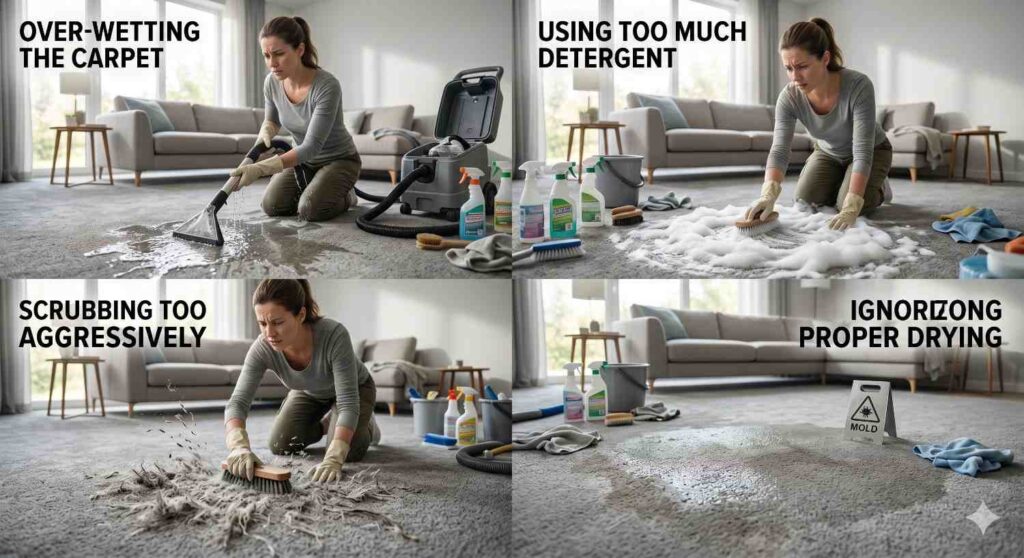
Over-wetting is the single most destructive mistake in carpet cleaning. When too much water saturates carpet fibers, it soaks through to the backing and padding beneath, creating conditions that are nearly impossible to reverse without professional intervention.
Most homeowners assume more water means a deeper clean. The opposite is true. Excess moisture loosens the carpet backing adhesive, causes fiber shrinkage, and creates a damp environment where mold and mildew thrive within 24 to 48 hours.
Why Excess Moisture Damages Carpet Fibers and Padding
Carpet is a layered system. The face fibers you see sit on a primary backing, which bonds to a secondary backing, which rests on the padding and subfloor beneath. When water penetrates past the face fibers, it saturates each layer in sequence.
Padding acts like a sponge. Once saturated, it holds moisture for days, even when the surface feels dry to the touch. This trapped moisture causes the subfloor to absorb water, which leads to warping, delamination of the carpet backing, and mold growth that spreads invisibly beneath the surface.
Wool carpets are especially vulnerable. Wool fibers swell when wet and can shrink or distort permanently if over-wetted. Synthetic fibers like nylon and polyester are more forgiving but still suffer backing damage and delamination when soaked repeatedly.
How to Control Moisture During Carpet Cleaning
The goal of any wet cleaning method is to apply the minimum amount of moisture needed to suspend and extract soil, then remove as much of that moisture as possible immediately.
Use a low-moisture cleaning method when possible, such as encapsulation or dry compound cleaning for maintenance cleaning. When hot water extraction is necessary for deep cleaning, make multiple slow extraction passes over each area to pull moisture back out of the fibers before moving on.
After cleaning, run fans, open windows, and use a dehumidifier to accelerate drying. Carpet should be dry within six to eight hours. If it takes longer than 12 hours, you have likely applied too much water or your extraction equipment is not powerful enough.
Scrubbing Stains Instead of Blotting Them
Scrubbing a stain is an instinctive response that makes the problem significantly worse. When you scrub, you drive the staining agent deeper into the carpet pile, spread it outward into a larger area, and physically damage the fiber structure through abrasion.
This is one of the most common mistakes homeowners make because it feels productive. The vigorous motion seems like it should be removing the stain. Instead, it is unraveling fibers, fraying the carpet pile, and embedding the stain into the backing where it becomes nearly impossible to remove.
How Scrubbing Spreads Stains and Breaks Down Fibers
Carpet fibers are twisted or looped strands anchored at the base. Scrubbing applies lateral force that untwists these strands, separates fiber bundles, and creates a fuzzy, matted appearance called pilling or fraying. Once fibers are damaged this way, the texture change is permanent.
At the same time, the scrubbing motion pushes liquid stains outward in a circular pattern, enlarging the affected area with each pass. A small coffee spill can become a large, irregular stain in seconds of aggressive scrubbing.
The Correct Blotting Technique for Stain Removal
Blotting applies downward pressure to absorb the staining agent upward into a clean cloth, rather than pushing it deeper or spreading it outward.
Use a clean white cloth or paper towel. Press firmly onto the stain and hold for several seconds, then lift straight up. Move to a clean section of the cloth and repeat. Always work from the outer edge of the stain inward toward the center to prevent spreading.
Apply your cleaning solution sparingly, allow it to dwell for 30 to 60 seconds to break down the stain, then blot again. Repeat this cycle until the stain is fully lifted. Never rub, never scrub, and never use a colored cloth that might transfer dye to the carpet.
Using the Wrong Cleaning Products on Carpet
Not every cleaning product is safe for carpet. Many household cleaners, including bleach, ammonia-based products, and high-alkaline degreasers, are formulated for hard surfaces and will damage carpet fibers, strip protective coatings, or permanently alter the color of your carpet.
The cleaning product market is full of options that claim to be carpet-safe but contain ingredients that cause long-term damage. Understanding which products to avoid and which to use protects both your carpet and your indoor air quality.
Harsh Chemicals That Damage Carpet Fibers and Backing
Bleach is the most obvious offender. Even diluted bleach solutions will strip color from carpet fibers and weaken the fiber structure, causing premature breakdown. This damage is irreversible.
Ammonia-based cleaners are equally problematic. Ammonia has a high pH that can break down the protective finish on carpet fibers and cause color bleeding in certain dye types. It also leaves a residue that attracts soil rapidly.
Highly alkaline cleaners, including many all-purpose degreasers, can damage wool and other natural fiber carpets by breaking down the protein structure of the fiber itself. Acidic cleaners, on the other end of the pH scale, can cause similar damage to synthetic fibers if used in high concentrations.
Oxygen bleach products marketed as carpet cleaners can be safer than chlorine bleach but still carry risks on certain fiber types and dye systems. Always test in an inconspicuous area first.
How to Choose the Right Carpet Cleaning Solution
The safest carpet cleaning solutions are pH-neutral, meaning they fall between 6 and 8 on the pH scale. These products clean effectively without disrupting the fiber chemistry or leaving damaging residue.
Enzyme-based cleaners are particularly effective for organic stains such as pet urine, blood, food, and vomit. Enzymes break down the organic molecules that cause both the stain and the odor at a molecular level, rather than simply masking them.
Always check the product label for compatibility with your carpet fiber type. Wool requires wool-safe, pH-neutral products specifically. Synthetic carpets tolerate a slightly wider range but still benefit from pH-neutral formulations. When in doubt, contact the carpet manufacturer for their approved cleaning product recommendations.
Skipping the Pre-Treatment Step Before Deep Cleaning
Pre-treatment is the step that separates a surface clean from a genuine deep clean. Applying a cleaning solution and immediately extracting it gives the product almost no time to work. Pre-treatment allows the cleaning chemistry to penetrate, suspend, and loosen soil before the extraction process begins.
Skipping this step is especially costly in high-traffic areas, where compacted soil and oily residue from foot traffic have bonded to carpet fibers over time. Without pre-treatment, these deposits remain largely intact even after hot water extraction.
Why Pre-Treatment Matters for Stubborn Stains and Soiling
Soil in carpet exists in two forms: dry particulate soil that vacuuming removes, and oily or sticky soil that bonds to fibers and requires chemical action to release. Pre-treatment targets the second category.
Traffic lane soiling, the dark, matted appearance in hallways and main walking paths, is primarily oily soil from skin oils, cooking residue, and outdoor contaminants tracked in on shoes. This type of soiling requires a pre-spray with appropriate dwell time to emulsify the oils before extraction can remove them.
Without pre-treatment, hot water extraction simply pushes this oily soil around rather than removing it. The carpet may look slightly cleaner immediately after cleaning but will re-soil rapidly because the oily residue remains in the fibers.
How to Pre-Treat Carpet Correctly Before Cleaning
Apply your pre-treatment solution evenly across the carpet surface using a pump sprayer or applicator. Use a slightly higher concentration in traffic lanes and visibly soiled areas.
Allow the solution to dwell for the time specified on the product label, typically five to fifteen minutes. Do not allow it to dry on the carpet. During the dwell time, you can use a carpet grooming brush or pile lifter to work the solution into the fiber bundle and improve contact with embedded soil.
After the dwell time, proceed with your primary cleaning method. The pre-treatment will have loosened the soil significantly, making extraction far more effective and reducing the number of passes needed.
Not Vacuuming Before Wet Cleaning the Carpet
Vacuuming before wet cleaning is not optional. It is a foundational step that determines how effective your wet cleaning will be. Skipping it is like washing dishes without rinsing off the food first.
Dry soil, including sand, grit, dust, pet hair, and loose debris, makes up the majority of what accumulates in carpet fibers. When you apply water or cleaning solution to carpet that has not been vacuumed, this dry soil mixes with the moisture to form a muddy slurry that is far harder to extract than either the dry soil or the liquid alone.
Why Dry Soil Removal Must Come Before Moisture-Based Cleaning
Sand and grit particles are abrasive. When wet cleaning agitates carpet fibers that still contain these particles, the abrasive action grinds against the fiber surface, accelerating wear and dulling the carpet’s appearance over time. This is a cumulative effect that shortens the lifespan of the carpet significantly.
Vacuuming before wet cleaning also reduces the soil load that your cleaning solution and extraction equipment must handle. A lower soil load means your cleaning chemistry works more efficiently, your extraction equipment stays cleaner, and the overall cleaning result is dramatically better.
Use a high-quality vacuum with strong suction and a beater bar or brush roll for best results. Make multiple passes in different directions over high-traffic areas to dislodge compacted soil before any wet cleaning begins.
Ignoring Manufacturer Guidelines and Carpet Fiber Type
Every carpet comes with a care label and cleaning code that specifies exactly how it should be cleaned. Ignoring these guidelines is one of the fastest ways to void your carpet warranty and cause irreversible damage.
Different carpet fibers have fundamentally different chemical compositions, and what works safely on one fiber type can destroy another. Treating all carpets the same way is a mistake that professional cleaners never make.
How Different Carpet Fibers React to Cleaning Methods
Nylon is the most durable and forgiving synthetic fiber. It tolerates hot water extraction well, accepts most pH-neutral cleaning products, and responds well to pre-treatment. It is the most common carpet fiber in residential and commercial settings.
Polyester is stain-resistant but prone to oil-based soiling. It requires careful attention to cleaning product selection because alkaline products can cause color changes. Polyester also tends to mat and crush in high-traffic areas, which cleaning cannot fully reverse.
Olefin (polypropylene) is highly resistant to moisture and most chemicals but attracts oily soil aggressively. It requires low-moisture cleaning methods and specific degreasing pre-treatments to clean effectively.
Wool is the most sensitive fiber. It requires pH-neutral, wool-safe products, low-temperature water, and gentle agitation. Hot water, high-alkaline products, and aggressive scrubbing will shrink, felt, or permanently damage wool fibers. Wool carpets should almost always be cleaned by a professional with specific wool cleaning experience.
Reading Carpet Care Labels and Cleaning Codes
The Carpet and Rug Institute and most carpet manufacturers use a standardized cleaning code system on care labels:
W means water-based cleaning methods are safe. You can use water-based cleaning solutions and hot water extraction.
S means solvent-based cleaning only. Water-based methods will damage this carpet. Use dry-cleaning solvents only.
WS means both water-based and solvent-based methods are acceptable.
X means vacuum only. No liquid cleaning of any kind should be applied. Professional dry cleaning may be the only option.
Always locate and read this label before beginning any cleaning process. If the label is missing, contact the carpet manufacturer with the carpet’s style number for guidance.
Failing to Rinse Out Cleaning Solution Residue
Leaving cleaning solution residue in carpet fibers after cleaning is a mistake that creates a problem worse than the original soiling. Detergent residue is sticky. It acts as a magnet for new soil, causing the carpet to re-soil dramatically faster than it would have without cleaning.
This is why many homeowners notice their carpet looks dirty again within days or weeks of cleaning. The cleaning itself was not the problem. The failure to rinse out the cleaning solution was.
How Soap Residue Attracts Dirt and Causes Rapid Re-Soiling
Surfactants, the active cleaning agents in most carpet cleaning products, work by surrounding soil particles and suspending them in solution so they can be extracted. When these surfactants are not fully removed, they remain in the fiber in their active state, continuing to attract and bind to new soil particles from foot traffic, airborne dust, and everyday use.
The result is a carpet that appears to get dirty faster after cleaning than it did before. This is not a coincidence. It is a direct consequence of residue left in the fibers. In severe cases, the residue also causes a stiff, crunchy texture in the carpet pile.
Wicking is a related problem. When carpet dries after cleaning, moisture moves upward through the fibers by capillary action. If soil or residue was not fully extracted from the backing or padding, this wicking action carries it back up to the surface, causing stains to reappear after the carpet dries.
Proper Rinsing Techniques to Prevent Residue Buildup
After applying cleaning solution and extracting the primary soil load, make at least one additional pass over the carpet using clean, hot water only, with no added cleaning product. This rinse pass flushes remaining surfactant residue out of the fiber and into the extraction tank.
For heavily soiled areas or areas where significant pre-treatment was applied, two rinse passes may be necessary. The water in your extraction tank should run relatively clear after a proper rinse pass. If it is still heavily discolored, additional rinsing is needed.
Using a neutralizing rinse solution, typically a mildly acidic product that counteracts alkaline cleaning residue, is standard practice in professional carpet cleaning and significantly reduces re-soiling rates.
Allowing Carpet to Dry Too Slowly After Cleaning
Drying time is not a passive afterthought. It is an active part of the cleaning process that directly determines whether your cleaning effort results in a fresh, clean carpet or a mold and mildew problem that develops beneath the surface.
Carpet that remains damp for more than 12 to 24 hours is at serious risk for mold growth, musty odors, and subfloor damage. In humid climates or poorly ventilated spaces, this risk escalates significantly.
Mold, Mildew, and Odor Risks from Slow Drying
Mold spores are present in virtually every indoor environment. They are harmless when dry but activate rapidly in the presence of moisture. Carpet padding and subfloor materials provide the organic material mold needs to establish and spread.
Once mold establishes beneath carpet, it is extremely difficult to remediate without removing the carpet and padding entirely. The musty odor associated with mold-contaminated carpet is not just unpleasant. It indicates active mold growth that affects indoor air quality and can trigger respiratory symptoms, particularly in individuals with allergies or asthma.
Slow drying also allows soil that was suspended during cleaning to settle back into the fiber as the water evaporates, reducing the effectiveness of the cleaning and contributing to wicking stains.
How to Speed Up Carpet Drying After a Deep Clean
Airflow is the most effective tool for accelerating carpet drying. Place box fans or air movers directly on the carpet surface to move air across the fibers continuously. Open windows and doors to increase ventilation if outdoor humidity is lower than indoor humidity.
Run your HVAC system or a standalone dehumidifier to reduce indoor humidity levels. Lower humidity accelerates evaporation from the carpet surface significantly.
Avoid walking on the carpet until it is fully dry. Foot traffic on damp carpet compresses the fibers and slows drying while also re-depositing soil from shoes. If you must walk on it, use clean socks or shoe covers.
In most residential settings with adequate airflow, carpet cleaned with proper moisture control should be dry within four to eight hours. If drying consistently takes longer than this, your cleaning method is applying too much water.
When Should You Call a Professional Carpet Cleaner Instead of DIY?
DIY carpet cleaning handles routine maintenance and fresh stains effectively. But there are clear situations where professional equipment, chemistry, and expertise are the only way to achieve a genuine deep clean or address a serious problem.
Relying Solely on DIY Methods for Deep Carpet Cleaning
Consumer-grade carpet cleaning machines, including rental units from grocery stores and home improvement stores, are significantly less powerful than professional equipment. They apply more water than they can extract, leave more residue than professional-grade chemistry, and cannot reach the soil depth that professional truck-mounted systems achieve.
This does not mean DIY cleaning has no value. Regular vacuuming and prompt stain treatment are essential maintenance tasks that every homeowner should perform. But relying exclusively on DIY methods for deep cleaning leads to gradual soil accumulation, fiber damage, and indoor air quality issues that compound over time.
What Professional Carpet Cleaning Includes That DIY Misses
Professional truck-mounted hot water extraction systems generate water temperatures between 200 and 230 degrees Fahrenheit and vacuum pressures that consumer machines cannot approach. This combination extracts soil from deep within the carpet pile and backing, removes significantly more moisture, and reduces drying time dramatically.
Professional cleaners also bring expertise in fiber identification, stain chemistry, and pre-treatment selection that most homeowners do not have. They can identify the type of stain, select the appropriate chemistry, and apply the correct technique for each specific situation rather than using a one-size-fits-all approach.
Additionally, professional cleaning includes post-cleaning grooming to restore carpet pile direction, application of carpet protector to extend the life of the clean, and a final inspection to address any remaining spots or issues.
How Often Should Carpets Be Professionally Cleaned?
The Carpet and Rug Institute recommends professional hot water extraction cleaning at least once every 12 to 18 months for average residential use. Homes with pets, children, allergy sufferers, or high foot traffic benefit from professional cleaning every six to twelve months.
Rental properties and commercial spaces with heavy traffic may require professional cleaning every three to six months to maintain appearance and hygiene standards. Many carpet manufacturers also require documented professional cleaning at specified intervals to maintain the warranty.
Hiring the Wrong Carpet Cleaning Company
Choosing the wrong carpet cleaning company can leave you with a carpet that is wetter, dirtier, or more damaged than before the service. The carpet cleaning industry has a well-documented history of bait-and-switch pricing, unlicensed operators, and low-quality service that homeowners and property managers need to navigate carefully.
Red Flags to Watch for When Choosing a Carpet Cleaner
Extremely low advertised prices, such as whole-house cleaning for $49 or $99, are almost always bait-and-switch offers. The initial price covers a minimal service, and the technician then pressures you to add treatments, protectors, and upgrades that multiply the final bill several times over.
Lack of verifiable credentials is another serious warning sign. Reputable carpet cleaning companies carry liability insurance, employ technicians with IICRC (Institute of Inspection, Cleaning and Restoration Certification) certification, and can provide references or verifiable online reviews.
High-pressure sales tactics, vague pricing structures, and refusal to provide a written estimate before beginning work are all indicators of a company that prioritizes upselling over quality service.
What to Look for in a Trustworthy Carpet Cleaning Service
A trustworthy carpet cleaning company provides transparent, itemized pricing before the work begins. They explain exactly what the service includes, what equipment they use, and what results you can realistically expect.
Look for IICRC certification, which indicates the company and its technicians have completed standardized training in cleaning science, fiber identification, and restoration techniques. Ask specifically whether they use truck-mounted or portable equipment, as truck-mounted systems consistently deliver superior results.
Check for verifiable reviews on Google, Yelp, or the Better Business Bureau. Ask for references from previous customers in your area. A company confident in its work will have no hesitation providing these.
Conclusion
Carpet cleaning mistakes, from over-wetting and scrubbing to skipping pre-treatment and ignoring fiber type, cause damage that accumulates invisibly until it becomes a costly repair or replacement. Understanding the correct techniques for moisture control, stain removal, product selection, and drying protects your carpet investment and maintains a healthier indoor environment for everyone in your home or property.
At AirDuctVet Dryer & Vent Cleaning Services, we understand that indoor air quality depends on more than just clean air ducts. Carpets, upholstery, and the entire indoor environment work together, and professional cleaning standards matter across every surface. Our commitment to transparent service, honest pricing, and industry-approved methods extends to every recommendation we make for homeowners and property managers in Alexandria, VA.
If you are ready to protect your indoor environment with professional, trustworthy service, contact AirDuctVet Dryer & Vent Cleaning Services today. We are here to help you make informed decisions, avoid costly mistakes, and maintain a cleaner, healthier home.
Frequently Asked Questions
Can you clean carpet with just water and no cleaning solution?
Plain water can rinse light surface soiling but will not effectively remove oily soil, stains, or embedded debris. Most carpet cleaning requires a pH-neutral cleaning solution to emulsify and suspend soil so it can be extracted. Using only water also increases the risk of over-wetting without achieving a thorough clean.
How long should carpet take to dry after cleaning?
Carpet should dry within four to eight hours after professional hot water extraction cleaning with proper moisture control. If drying takes longer than 12 hours, too much water was applied or airflow is insufficient. Run fans, open windows, and use a dehumidifier to accelerate drying and prevent mold growth.
Is it bad to clean carpet too often?
Cleaning carpet too frequently with aggressive methods or excessive moisture can accelerate fiber wear and backing deterioration. However, regular vacuuming is always beneficial. Professional deep cleaning every 12 to 18 months is appropriate for most households, with more frequent cleaning for high-traffic areas, pets, or allergy concerns.
What happens if you leave cleaning solution in carpet?
Cleaning solution left in carpet fibers acts as a soil magnet, causing the carpet to re-soil rapidly after cleaning. The sticky surfactant residue binds to new soil particles from foot traffic and airborne dust, making the carpet appear dirty again within days or weeks. Always rinse with clean water after applying any cleaning product.
Can scrubbing a stain permanently damage carpet?
Yes. Scrubbing applies lateral force that untwists and frays carpet fibers, creating a fuzzy, matted texture that cannot be restored. It also spreads the stain outward and drives it deeper into the pile and backing. Always blot stains with a clean cloth using downward pressure, working from the outer edge inward.
What is the most common mistake people make when cleaning carpet?
Over-wetting is the most common and most damaging mistake in carpet cleaning. Applying too much water saturates the backing and padding, creates conditions for mold growth, causes backing delamination, and significantly extends drying time. Using the minimum moisture necessary and extracting thoroughly immediately after cleaning prevents this problem.
How do you know if a carpet cleaning company is trustworthy?
A trustworthy carpet cleaning company provides transparent, itemized pricing before starting work, employs IICRC-certified technicians, carries liability insurance, and has verifiable reviews from local customers. Avoid companies offering unusually low prices, as these are typically bait-and-switch offers that result in high-pressure upselling once the technician is in your home.

